The Blind Men and the Elephant (Buddhism)
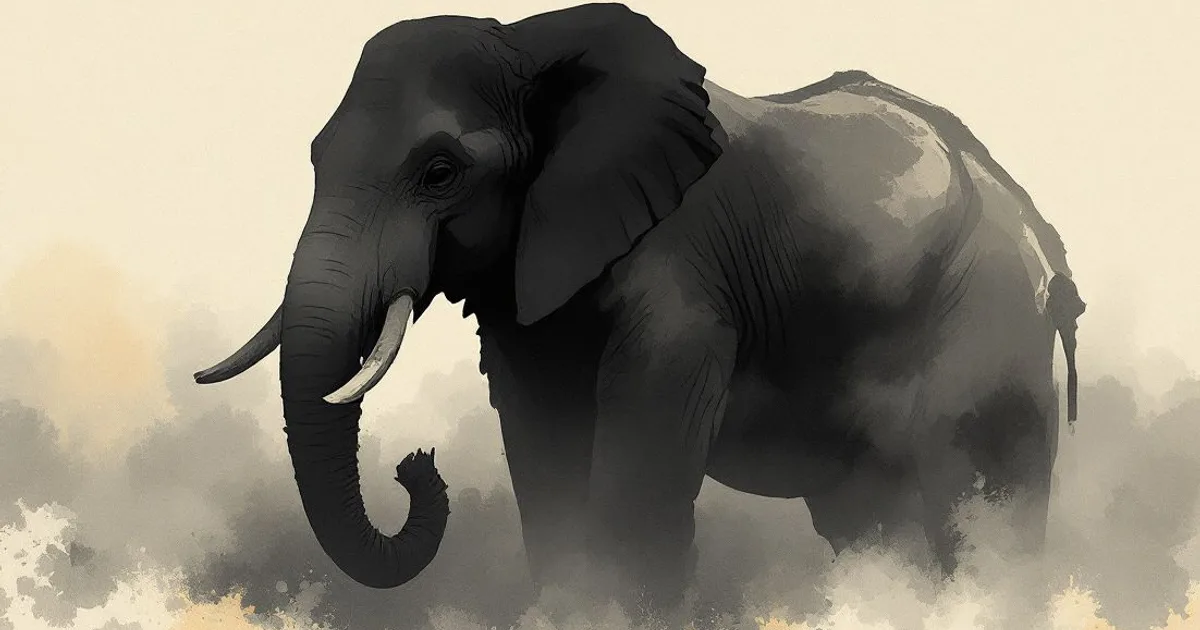
In the parable of the blind men and the elephant, a king has several people blind from birth each feel a different part of an elephant — and each then insists, fiercely, that the whole elephant is exactly like the part they touched. They argue, and finally come to blows. The Buddha told it to show how people who grasp only a fragment of the truth mistake it for the whole — and quarrel.
The story
In the Tittha Sutta, monks report that wanderers of rival sects in the city are endlessly debating, each insisting “this alone is true, anything else is worthless,” and abusing one another. The Buddha responds with a story.
Once, a king of Sāvatthī gathered everyone in the city who had been blind from birth and had an elephant brought out. He had each group touch a different part. To one he presented the head, to another an ear, to others the tusk, the trunk, the body, the foot, the tail. Then he asked each: what is an elephant like?
The ones who had felt the head said, “An elephant is like a pot.” Those who felt the ear said, “like a winnowing basket.” The tusk: “like a plowshare.” The trunk: “like a plow.” The body: “like a storeroom.” The foot: “like a pillar.” The tail: “like a broom.” And each, certain of their fragment, declared: “An elephant is like this — it is not like that!” Insisting and contradicting, “they came to blows.” And the king, the story says, was delighted.
What it means
The Buddha’s application is exact. The sectarians and debaters, he says, are “attached to these things, holding to them, quarrelling about them… seeing only one side.” Each has hold of a real part of the truth — the blind men were not lying; an elephant’s ear is rather like a winnowing basket — but each has mistaken his part for the whole, and so they “quarrel, brawl, and wound one another with weapons of the mouth.”
The teaching is a warning against two linked dangers: the arrogance of partial knowledge, and the violence of dogmatic certainty. It is a portrait of every comment-section war and sectarian feud ever fought — people clutching fragments, each sure they alone hold the elephant.
An honest reading
The parable is so often quoted to mean “all religions are equally true — everyone has a piece of it” that it is worth being careful, because that is not quite the Buddha’s point. In the Udāna, the Buddha is not one of the blind men, fumbling at the dark like the rest. He is more like the one who can actually see the whole elephant. His lesson is not the relativist “everybody’s right,” but something humbler and sharper: beware of mistaking your fragment for the whole, and beware of the quarrels that follow.
That distinction matters, and most retellings blur it. We keep it, because the parable’s real gift is not a flattering “we’re all equally right” but an uncomfortable mirror: how often am I the blind man, certain my corner of the elephant is the entire animal?
Why it still matters
In an age of confident opinion and endless argument, the blind men and the elephant is almost unbearably current. It counsels intellectual humility — the recognition that our view is partial, our certainty usually premature — and it counsels peace, since most of our fiercest disputes are blind men brawling over an elephant none of us has wholly grasped. It pairs naturally with the raft (hold even your views lightly) and with the teaching of emptiness (no fixed position captures the whole of reality). (For how Buddhism holds its own truth-claims, see is Buddhism a religion or a philosophy? For more stories, return to Buddhist parables; unfamiliar terms are in the glossary.)
Frequently asked questions
What is the Buddhist parable of the blind men and the elephant?
In the Tittha Sutta (Udana 6.4), a king gathers people blind from birth and has each touch a different part of an elephant — the head, ear, tusk, trunk, body, foot, or tail. Each then insists the whole elephant is exactly like the part they felt: 'an elephant is like a pot!' 'No, like a winnowing basket!' They argue, then come to blows. The Buddha uses the image to show how people who grasp only part of the truth quarrel because each mistakes their fragment for the whole.
What is the real meaning of the blind men and the elephant?
The Buddha's point is about the danger of clinging to partial views. The sectarians and debaters of his day, he says, each 'see only one side' and so 'quarrel, brawl, and wound one another with weapons of the mouth.' The parable is a warning against dogmatic certainty and pointless dispute — and an invitation to humility about how partial our own grasp of things usually is.
Does the parable mean all religions are equally true?
That is the popular modern reading, but it is not quite the Buddha's point — and an honest telling should say so. In the Udana, the Buddha is not one of the blind men; he is more like the one who can see the whole elephant. His lesson is not 'everyone is equally right' but 'beware of mistaking a fragment for the whole and fighting over it.' It is a teaching about humility and the folly of dogmatic quarrelling, not a statement that every view is true.
Where does the blind men and the elephant come from?
The version with the Buddha's commentary is in the Tittha Sutta, the fourth discourse of the sixth chapter of the Udana ('Exclamations'), in the Pali Canon. The image is older and shared across Indian traditions (it appears in Jain and Hindu sources too), but the Buddhist telling frames it specifically as a critique of sectarian view-clinging.
Sources
- Tittha Sutta (Udāna 6.4) — a king has men blind from birth each touch a different part of an elephant; the one who felt the head says it is 'like a pot,' the ear 'like a winnowing basket,' the tusk 'like a plowshare,' the trunk 'like a plow,' the body 'like a storeroom,' the foot 'like a pillar,' the tail 'like a broom'; insisting 'an elephant is like this, it's not like that,' they come to blows. The Buddha applies it to sectarians 'attached to these things, holding to them… seeing only one side,' who 'quarrel, brawl, and wound one another with weapons of the mouth.' Access to Insight (trans. Ṭhānissaro Bhikkhu); SuttaCentral (trans. Bhikkhu Ānandajoti)