How to Meditate: A Step-by-Step Guide for Beginners
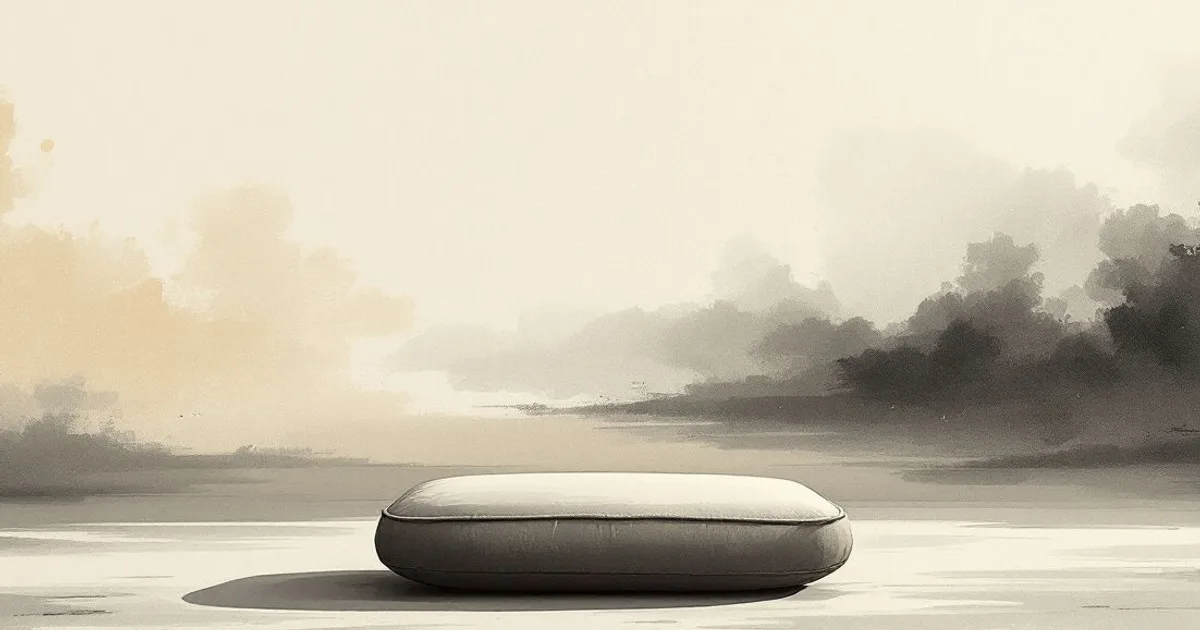
To meditate, sit comfortably, rest your attention on the natural breath, and — each time the mind wanders — gently bring it back. That simple loop, repeated, is the practice. The Buddha praised exactly this, mindfulness of breathing or ānāpānasati, as “of great fruit, of great benefit” — and it needs no belief, no equipment, and no special place.
The short answer
Meditation in Buddhism is bhāvanā — “mental cultivation or development” (Access to Insight glossary). You are not trying to stop thoughts or force a blank mind; you are training attention, the way you might train a muscle. For a beginner, the simplest doorway is the breath. In the Ānāpānasati Sutta (MN 118), the Buddha describes the posture plainly — one “sits down folding his legs crosswise, holding his body erect” (trans. Ṭhānissaro Bhikkhu) — and then simply watches the breath come and go. Everything below unpacks that. (For the bigger picture — the many kinds of Buddhist meditation and where they lead — see our complete guide to Buddhist meditation; for the quality of attention you are cultivating, see what mindfulness really means.)
How to meditate, step by step
Here is a simple six-step method. Treat it as a frame, not a rule — the heart of it is steps four and five: resting on the breath, and returning each time you drift.
1. Choose a time and place
Pick a quiet-ish spot where you won’t be disturbed, and — if you can — the same time each day, so it becomes a habit rather than a decision. Morning often suits, because the mind is fresh, but any time you will actually keep is the right time. You do not need silence, incense, or a dedicated room; a corner of an ordinary one is enough. Even a few minutes counts.
2. Take a stable posture
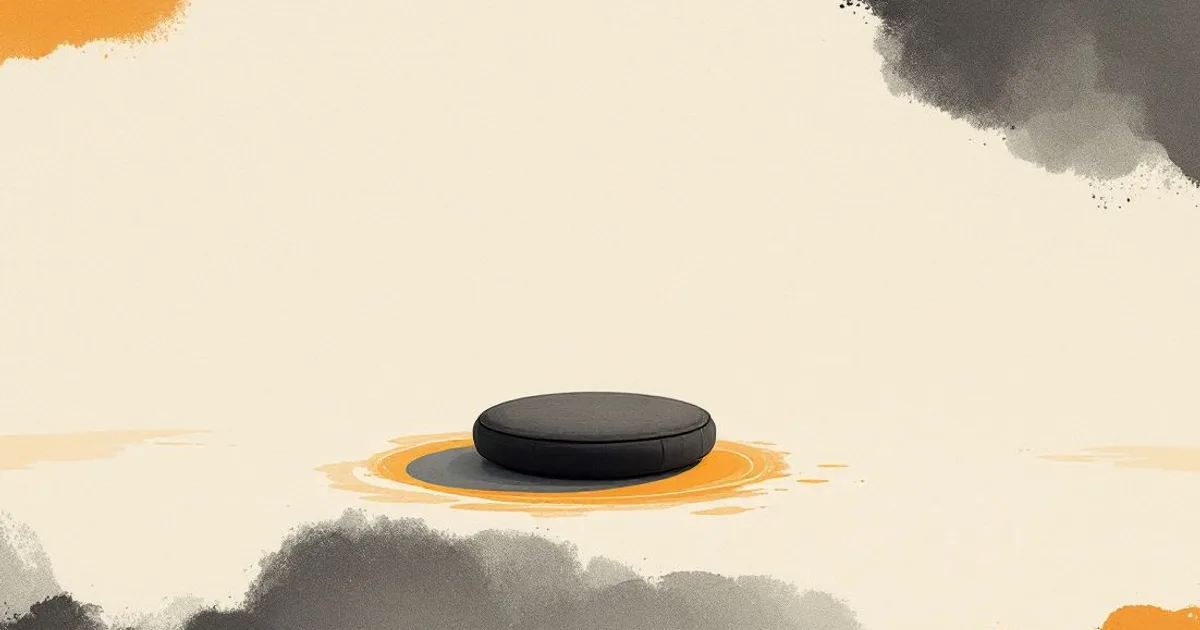
Sit so that you are upright but not rigid. You might use a cushion on the floor with the legs crossed, kneel astride a cushion, or simply sit on a chair with both feet flat. The classical instruction in MN 118 is to sit “folding his legs crosswise, holding his body erect” (trans. Ṭhānissaro Bhikkhu) — but the essential thing is an erect, settled spine, not a particular leg position. Let your hands rest in your lap or on your knees, soften your shoulders, and either lower your gaze or gently close your eyes. (For the seat in detail — the seven-point posture, full and half lotus, the easier Burmese position, kneeling on a bench, and the chair — see our guide to meditation posture.)
3. Arrive and take a few easy breaths
Before you start watching, let the body settle. Take two or three slightly slower, fuller breaths, and feel the weight of your body on the seat or floor. Then let the breath return to its own natural rhythm — you are not controlling it, only keeping it company.
4. Rest your attention on the breath
Choose one place where the breath is clearest: the cool touch of air at the nostrils, or the gentle rise and fall of the abdomen. Keep your attention lightly there, feeling one in-breath, then one out-breath, then the next. This is ānāpānasati — mindfulness of breathing (unfamiliar terms are explained in the glossary) — which the Buddha called “of great fruit, of great benefit” (MN 118, trans. Ṭhānissaro Bhikkhu). There is nothing to achieve in this moment except to feel this breath.
5. When the mind wanders, gently return
It will wander — into planning, memory, worry, a passing itch. This is not failure; it is simply what minds do. The practice is the noticing: the instant you realise you have drifted, you have already come back. Without irritation or commentary, set your attention again on the breath. You may do this a hundred times in ten minutes — and each return is one genuine repetition of the training.
6. Close with kindness
When your time is up, do not leap straight back into the day. Pause, and notice how the body and mind feel now. If you like, end with a moment of goodwill — the spirit of the Karaṇīya Metta Sutta (Snp 1.8), which asks us to cherish all beings as a mother cherishes “her child, her only child” (trans. The Amaravati Sangha): wish ease first to yourself, then to others. Then open your eyes and carry that steadiness into whatever comes next.
A little more depth

Why the breath?
The breath has three gifts for a beginner. It is always with you, so you never lack an object to return to. It is neutral, asking for no belief. And it sits squarely between the two great families of Buddhist practice — calming (samatha) and insight (vipassanā) — which the tradition treats as partners that “have a share in clear knowing” (Vijjābhāgiya Sutta, AN 2.30, trans. Ṭhānissaro Bhikkhu). Steadying on the breath calms the mind; a calmer mind can then see more clearly.
What “doing it right” feels like
Many beginners give up because they decide they are “bad at it” — their mind was busy, so they failed. But a busy mind that you keep gently returning from is a successful sit. Buddhist meditation is not blanking out. The Satipaṭṭhāna Sutta (MN 10) frames it as clear, steady attention — contemplating “the body in the body,” “feelings in feelings,” and the mind itself (trans. Soma Thera) — that is, noticing experience rather than escaping it. Calm and clarity do come, but as by-products of patient returning, never as something you can force. (If you keep hitting the same snags — drowsiness, restlessness, a mind that will not settle — see our guide to common meditation problems.)
How long, and how often?
Start small and regular rather than long and rare. The texts set no fixed daily quota; five or ten minutes a day, kept up, will teach you more than an occasional hour. (For a fuller answer, see our guide to how long and how often to meditate.) Let the time lengthen on its own as sitting becomes familiar. You can keep time without watching the clock using our free meditation timer, which marks the beginning and end of your sit with a bell — or strike our virtual singing bowl to open and close a sit. If steadying the breath itself is the hard part, our on-screen breathing pacer gives the in- and out-breath a calm rhythm to follow.
If difficult feelings arise
Sometimes, when the mind grows quiet, older feelings surface — restlessness, sadness, anxiety. This is common, and it usually passes. But there is no rule that you must sit on through distress: you can open your eyes, feel your feet on the floor, take a few ordinary breaths, and stop for today. Meditation is a support for a life, not a test to be endured — and if painful feelings are persistent or overwhelming, please reach toward real human support as well.
Keep going
This breath practice is the doorway, not the whole house. From here you can explore calming and insight meditation, loving-kindness, walking meditation, and the distinct methods of the Zen, Tibetan and Pure Land traditions — all mapped, with sources, in our complete guide to Buddhist meditation. The only real secret is the one you already have: begin, keep it small, and come back tomorrow.
Frequently asked questions
How do I meditate as a complete beginner?
Sit upright but relaxed, rest your attention on the natural breath at the nostrils or the belly, and each time your mind wanders, gently bring it back. That loop is the whole practice. Start with just five or ten minutes a day. You need no belief, no equipment, and no special place to begin.
What should I focus on when meditating?
For beginners the simplest object is the breath — this is anapanasati, the mindfulness of breathing the Buddha praised in the Anapanasati Sutta (MN 118). Pick one clear spot, such as the cool touch of air at the nostrils, and feel each in-breath and out-breath. Having a single, steady object makes it easier to notice when the mind has wandered.
Is it normal for my mind to wander constantly?
Completely normal — a wandering mind is not a sign you are doing it wrong. Minds wander; that is what they do. The practice is the returning: the moment you notice you have drifted, you have already come back. A sit in which you return a hundred times is a hundred repetitions of the real training, not a hundred failures.
Do I need a cushion, a teacher, or to be a Buddhist?
None of these to begin. You can sit on a chair with both feet flat instead of a cushion, and you can start entirely on your own — the breath practice requires no beliefs. That said, a good teacher or community helps as practice deepens, and the fuller Buddhist tradition gives the practice its direction and meaning.
How long should a beginner meditate?
Begin with about five or ten minutes a day. The texts prescribe no fixed amount, and a short daily habit builds far more steadiness than a long session you do only occasionally. Let the time grow naturally as sitting becomes comfortable; consistency matters more than duration.
Sources
- Ānāpānasati Sutta (MN 118), dhammatalks.org (trans. Ṭhānissaro Bhikkhu)
- Satipaṭṭhāna Sutta (MN 10), Access to Insight (trans. Soma Thera)
- Vijjābhāgiya Sutta (AN 2.30), Access to Insight (trans. Ṭhānissaro Bhikkhu)
- Karaṇīya Metta Sutta (Snp 1.8), Access to Insight (trans. The Amaravati Sangha)
- 'Bhāvanā' (glossary entry), Access to Insight
- Buddhist meditation (entry), Encyclopædia Britannica