Buddhism in Thailand and the Theravada Heartland
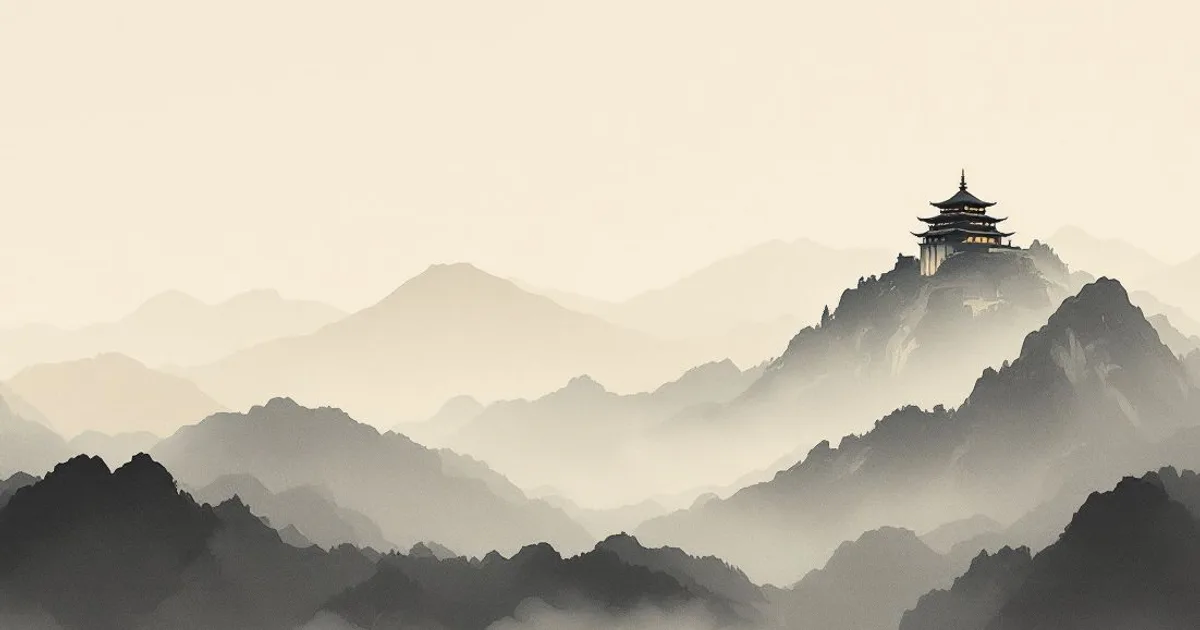
Buddhism in Thailand is overwhelmingly Theravada, the oldest surviving school of Buddhism — and it is woven into almost every part of Thai life. About 94% of Thais are Buddhist (Pew Research Center, 2020), and Thailand has the largest Buddhist population of any country on earth. Buddhism shapes the Thai calendar, village life, and national identity, and has long been bound up with the monarchy.
The short answer
Thailand is, by population, the most Buddhist large country in the world. Pew Research Center’s figures for 2020 put Buddhists at roughly 94% of the population — almost entirely Theravada, the “Teaching of the Elders” — and identify Thailand as the country “with the largest number of Buddhists,” about 68 million people. Here Buddhism is not a private affair set apart from public life; it runs through the year’s festivals, the rhythms of the village, the rites of birth and death, and the institution of the monarchy, which has historically been one of Buddhism’s chief patrons. To understand Thailand is, in large part, to understand Theravada Buddhism as a whole way of life — one of the three great branches of Buddhism. (Unfamiliar terms are explained in the glossary.)
The Theravada heartland
Thailand belongs to a band of countries — Sri Lanka and mainland Southeast Asia — where Theravada has been the established form of Buddhism for centuries. According to Pew’s 2020 data, Buddhists form a clear majority in:
- Cambodia — about 97%
- Thailand — about 94%
- Myanmar (Burma) — about 89%
- Sri Lanka — about 70%
- Laos — about 64%
Each of these countries is predominantly Theravada, and together they make up what is often called the “Southern” transmission of Buddhism, in contrast with the “Northern” spread of Mahayana into East and Central Asia. The thread that binds them is the Pali Canon, the early scripture this school preserves.
That common heritage has deep historical roots. Sri Lanka holds a special place: it is where the Pali Canon was first committed to writing, in the first century BCE, after centuries of oral transmission. From the Sri Lankan reform tradition, combined with older Buddhist practice preserved among the Mon people of southern Myanmar, came an eleventh-century revival that, in Encyclopaedia Britannica’s account, “established the Theravada tradition as the most dynamic in Myanmar.” From there the movement spread: “By the late 13th century,” Britannica notes, “the movement had spread to Thailand,” and over the following two centuries “Theravada reforms penetrated as far as Cambodia and Laos.” So the Theravada of mainland Southeast Asia is, in a real sense, one shared inheritance carried across borders.
Each country also has its own character. Myanmar became, in the twentieth century, a great centre of the vipassana (insight-meditation) revival that has since spread worldwide. Sri Lanka remains the guardian of the oldest written canon. Cambodia and Laos, despite the immense disruptions of the twentieth century, have seen Theravada reassert itself as the spiritual centre of national life. For the wider picture of how these fit into the global map of the tradition, see our guide to Buddhism around the world.
How Buddhism shapes Thai life
The Sangha and its administration
At the institutional heart of Thai Buddhism is the Sangha — the order of monks (bhikkhus). Monks renounce ordinary life to devote themselves to study, meditation, and the preservation of the teaching, while lay people support them with food and offerings. In Thailand this order is not loosely organised; it is administered through a national hierarchy of senior monks, governed by a supreme council and headed by the Supreme Patriarch (Sangharaja), the most senior monk in the country. This formal structure, backed historically by royal authority, helps explain why Thai Buddhism has a strong sense of national institution as well as local community.
The wat at the centre of the village
The most visible expression of Buddhism in Thailand is the wat — the temple-monastery. A wat is at once a place of worship, a residence for monks, and the gathering point of the community. Historically the village wat was also the local school, meeting hall, and social hub; festivals, funerals, ordinations, and merit-making all happen there. To this day, the gilded roofs of the wat mark the centre of most Thai towns and villages, and the relationship between the monastery and the lay community around it — each sustaining the other — is the living engine of the tradition.
Merit-making and the alms round
Daily Buddhist practice for most Thai lay people centres on merit-making (Thai: tham bun) — performing wholesome acts that, in Buddhist understanding, generate good karma. The most familiar form is offering food to monks. Each dawn, monks walk out from the wat with their alms bowls on the morning alms round (Thai: bindabat), and lay people wait to place rice and food into the bowls — a quiet daily exchange in which the laity feed the Sangha and the Sangha sustains the teaching. Merit is also made by supporting a temple, sponsoring an ordination, keeping the five precepts, releasing captive animals, and many other acts. Importantly, merit can be dedicated to others — including deceased relatives — which is one reason a death in the family often prompts acts of merit.
Temporary ordination
One of the most distinctive features of Thai Buddhism is the custom of temporary ordination. Rather than being a lifelong vocation only, monkhood in Thailand is something many men enter for a limited period. Traditionally a young man would ordain for one rains retreat (vassa, Thai phansa) — roughly three months during the rainy season, the period the Buddha himself set aside for monks to stay in one place. Today the stay is often much shorter, and ordination can happen at any time of year, but the meaning endures: it is a way to study the Dhamma, to mark the passage into adulthood, and above all to make merit, classically as an expression of gratitude to one’s parents. A man returns to lay life afterwards with honour, often regarded as more “ripe” and ready for marriage and responsibility. This pattern — full ordination as a normal, honoured, and often temporary stage of life — is woven deeply into Thai society.
Festivals and the Buddhist year
The Thai year is punctuated by Buddhist festivals tied to the lunar calendar. Visakha Bucha (Vesak) marks the Buddha’s birth, enlightenment, and passing; Makha Bucha commemorates a great spontaneous gathering of disciples around the Buddha; and Asanha Bucha, with the following day of Khao Phansa, opens the three-month rains retreat — the season when temporary ordinations traditionally begin and the Sangha settles for intensive practice. These observances fill the wats with lay people offering candles, flowers, and incense, and walking in candle-lit circumambulation of the temple’s main shrine.
Reform and the forest: two Thai movements
Thai Buddhism is not a single undifferentiated block; within it run distinct currents worth knowing.
The Dhammayut reform
In the nineteenth century, a Thai prince named Mongkut — who lived as a Buddhist monk for some twenty-seven years before becoming King Rama IV (he reigned 1851–1868) — set out to reform monastic practice. Troubled by what he saw as lax and folk-laden practice, he sought to return discipline to the standards of the Pali Canon and strip away superstition. The movement he began in the 1830s grew into the Dhammayuttika order (Thai: Thammayut) — a reform-minded, scripturally rigorous monastic order. As Encyclopaedia Britannica puts it, “The reformed Buddhism that Mongkut developed gradually grew into the Thammayut order, which to the present day is at the intellectual centre of Thai Buddhism.” Alongside it, the older and far larger body of Thai monks is known as the Maha Nikaya. The two orders coexist within the one national Sangha.
The Thai forest tradition
Out of that same reforming impulse — but pulling toward meditation rather than scholarship — grew the Thai forest tradition. Around the turn of the twentieth century, the revered monks Ajahn Sao Kantasilo and his pupil Ajahn Mun Bhuridatto revived the ancient practice of the wandering, meditating forest monk: living simply in the wilderness, keeping strict ascetic observances, and pursuing direct insight through meditation over textual study. This kammatthana (“meditation-subject”) lineage produced a series of greatly respected masters and became one of Thailand’s most influential spiritual movements — and, through teachers such as Ajahn Chah, one of the most important channels by which Theravada meditation reached the West. We trace this lineage in detail in our guide to the Thai forest tradition.
Thailand and the monarchy
It is hard to discuss Thai Buddhism without the monarchy, because the two have been historically entwined for centuries. Thai kings have long acted as patrons and protectors of the Sangha — building temples, supporting monastic education, and lending royal authority to the order’s administration — in a relationship that echoes the ancient Buddhist ideal of the righteous ruler who upholds the Dhamma. King Mongkut’s reforms are one famous instance of royal involvement in religious life. This close bond is part of why, in Thailand, Buddhism, nation, and crown have so often been spoken of in the same breath.
Thailand among the traditions
Thailand is the largest Buddhist nation by population, and its religious life is a vivid, lived example of Theravada Buddhism — the conservative, Pali-Canon-based stream that holds up the arahant and centres on the monastic Sangha and meditation. To see Thai Buddhism clearly is to see one face of a tradition shared across Sri Lanka, Myanmar, Cambodia, and Laos, and to glimpse how an ancient teaching can become the very fabric of a society: its temples, its calendar, its rites of passage, and its daily acts of generosity. For the full map of the great traditions and how they relate to one another, see our overview of the branches of Buddhism, and for the doctrinal foundations of Thai practice, our guide to Theravada Buddhism.
Frequently asked questions
What percentage of Thailand is Buddhist?
About 94% of Thailand's population is Buddhist, according to Pew Research Center figures for 2020 — almost all of it Theravada. Pew also identifies Thailand as the country with the largest number of Buddhists in the world, around 68 million people. Buddhism is woven so deeply into Thai life, calendar, and national identity that the two are difficult to separate, and the monarchy has long been one of its chief patrons.
Do all Thai men become monks?
Not all, but temporary ordination is a widespread and honoured custom. Many Thai men ordain as a bhikkhu (monk) for a limited period — traditionally for one rains retreat (vassa) of about three months, though today the stay is often much shorter. It is understood as a way to study the Dhamma, mark the passage to adulthood, and make merit, especially in gratitude to one's parents. A man returns to lay life afterwards with full honour.
What is a wat?
A wat is a Thai Buddhist temple-monastery — at once a place of worship, a home for monks, and the community's gathering point. Historically the village wat served as school, meeting hall, and social centre as well as a sacred space. It is where lay people offer alms, observe festivals, ordain, and make merit, and it remains the visible heart of Buddhist life in most Thai towns and villages.
What is merit-making in Thai Buddhism?
Merit-making (Thai: tham bun) is the everyday practice of doing good deeds that, in Buddhist understanding, generate wholesome karma. The most familiar form is offering food to monks — including the dawn alms round, when monks walk out with their bowls to receive the day's food from lay people. Other acts include supporting a temple, sponsoring an ordination, releasing animals, and keeping the precepts. Merit can also be dedicated to others, including deceased relatives.
Which countries are Theravada Buddhist?
The Theravada heartland is Sri Lanka and mainland Southeast Asia. Pew's 2020 figures show Buddhist majorities in Cambodia (97%), Thailand (94%), Myanmar/Burma (89%), Sri Lanka (70%), and Laos (64%) — all predominantly Theravada. Sri Lanka is where the Pali Canon was first written down; Myanmar became a great centre of the modern insight-meditation revival; and Thailand is home to the largest Buddhist population of all.
Sources
- Thailand religious composition, Pew Research Center, 'Religious Composition by Country, 2010–2020'
- 'Countries with the most Buddhists & global Buddhist population change, 2010–2020,' Pew Research Center (June 2025)
- Mongkut (entry), Encyclopædia Britannica
- Buddhism: Southeast Asia (entry), Encyclopædia Britannica
- Theravāda (entry), Encyclopædia Britannica