Dipa Ma: The Housewife Who Mastered Meditation
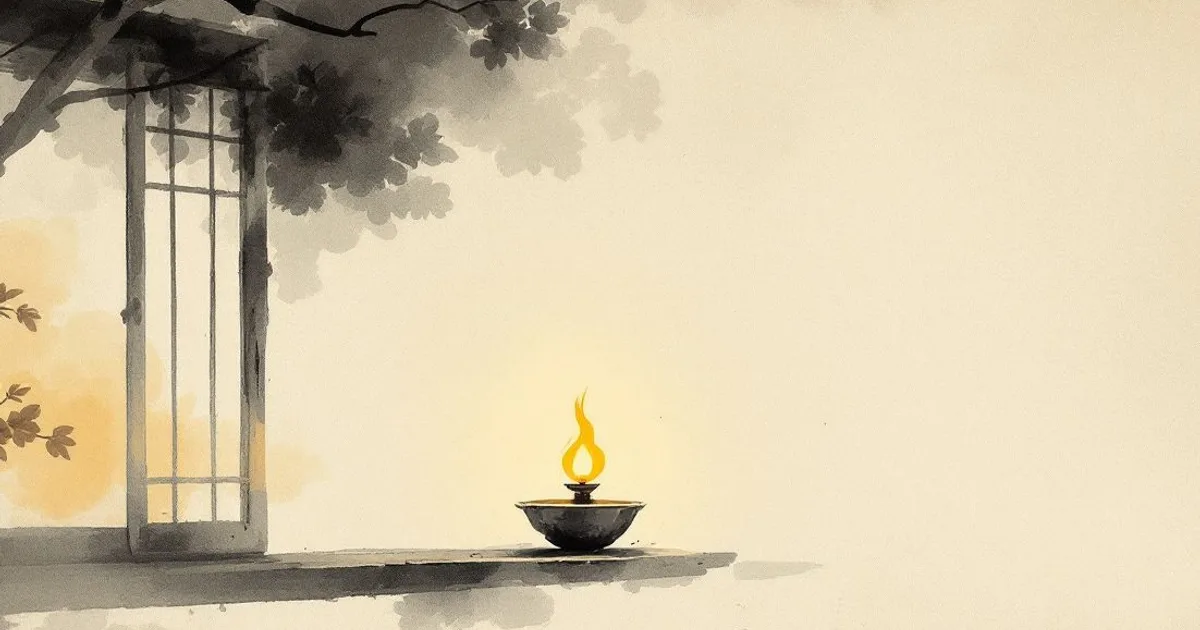
Dīpā Ma is one of the most quietly extraordinary figures in modern Buddhism: a Bengali widow and mother who, out of overwhelming grief, became a master of insight meditation so accomplished that she trained many of the people who brought the practice to the West. Her life is a standing rebuke to the idea that deep awakening belongs only to monks in monasteries, and a luminous chapter in the story of women in Buddhism.
A life broken open
She was born Nani Bala Barua in 1911, into a Buddhist family in the Chittagong region of what was then British India and is now Bangladesh. Married young, she longed for children but for years had none; when at last she became a mother, tragedy followed tragedy. She lost a young daughter, then an infant son, and then — suddenly — her husband. The grief was so total that it broke her health; the tradition records that she could barely rise from her bed, undone by sorrow.
It was in that shattered state that she turned, at last, fully to meditation — not as a hobby but as the only thing that might save her life. She has become, for that reason, a particular friend to anyone who comes to practice through loss.
The householder who mastered the path
Dīpā Ma took up vipassanā (insight) meditation under the teacher Anagarika Munindra, in the lineage of the great Burmese master Mahasi Sayadaw. What followed astonished those around her. Practising with ferocious dedication, she is said to have moved swiftly through deep stages of concentration and insight — the tradition credits her with profound samādhi and remarkable attainments — all while remaining a laywoman and a mother.
That is precisely what made her revolutionary. She did not retreat to a monastery; she folded the most rigorous practice into the texture of a household life — cooking, cleaning, raising her surviving daughter, caring for a grandchild — insisting that every act could be done with full mindfulness. Her teaching to harried laypeople, and especially to women, was direct and freeing: you can do this, here, in the life you already have.
Teacher of teachers
In the 1960s and after, a stream of young Western seekers travelling in India and Asia found their way to her. Among them were Joseph Goldstein, Sharon Salzberg, and Jack Kornfield — who would go on to found the Insight Meditation Society in Massachusetts and, more than anyone, plant vipassanā meditation in Western soil. Dīpā Ma taught them, sat with them, and in the early 1980s travelled to teach at IMS herself.
Her teaching for daily life
What Dīpā Ma taught was as practical as her own life had been. To busy laypeople she gave deceptively simple instructions: be mindful in everything — washing dishes, walking, speaking, feeling — so that the whole day becomes the practice rather than the twenty minutes set aside for it. She urged people to meditate a little every single day without fail, to keep the thread of practice unbroken, and to bring a patient, loving attention even to anger and grief. Those who knew her describe a fierce tenderness: utterly demanding about the practice, utterly gentle with the practitioner. Her core message never wavered — that you do not need to escape your life to be free within it, and that the deepest peace is available to an ordinary person who simply, steadily, pays attention.
Through that lineage, a Bengali grandmother who never ordained, never sought fame, and taught from a small apartment in Calcutta became one of the hidden roots of modern Western Buddhism. She is sometimes called, with affection, the “patron saint of householders” — not a formal title, but a fitting one for the woman who proved that liberation is for ordinary people living ordinary lives. (For her practice, see vipassanā meditation and what is mindfulness?; for the wider story, women in Buddhism. Unfamiliar terms are in the glossary.)
Frequently asked questions
Who was Dipa Ma?
Dipa Ma (1911–1989), born Nani Bala Barua in what is now Bangladesh, was a Bengali laywoman — a wife and mother — who, after devastating personal losses, became one of the great vipassana (insight) meditation masters of the twentieth century. Remarkably for the time, she was a householder and a woman, not a monastic, yet she trained many of the teachers who would go on to bring insight meditation to the West.
Why is Dipa Ma famous?
For two things: the depth of her own practice and the reach of her influence. Under the teacher Anagarika Munindra, in the lineage of the Burmese master Mahasi Sayadaw, she attained profound states of concentration and insight. And she became a teacher of teachers — among her students were Joseph Goldstein, Sharon Salzberg, and Jack Kornfield, co-founders of the Insight Meditation Society, through whom her influence runs through much of Western Buddhism today.
What did Dipa Ma teach?
That deep awakening is fully available to ordinary people living ordinary lives — that you do not have to be a monk or renounce your family to realize the path. She taught rigorous mindfulness woven directly into daily life: cooking, cleaning, caring for family, all done as meditation. Her message to busy laypeople, and especially to women managing households, was that liberation was within their reach without leaving any of it behind.
Was Dipa Ma a nun?
No — and that is part of her significance. She was a laywoman and a mother throughout her life. She is sometimes affectionately called a 'patron saint of householders,' a phrase coined by admirers rather than a formal title, precisely because she proved that the heights of meditation are open to those with families and homes, not only to monastics.
Sources
- Amy Schmidt, 'Dipa Ma: The Life and Legacy of a Buddhist Master' (2005) — the principal biography
- Lion's Roar, 'Mother of Light: The Inspiring Story of Dipa Ma'; Wikipedia ('Dipa Ma') — for her dates (1911–1989), her teacher Anagarika Munindra, and her influence on the founders of the Insight Meditation Society