Jataka Tales: The Buddha's Past Lives Explained
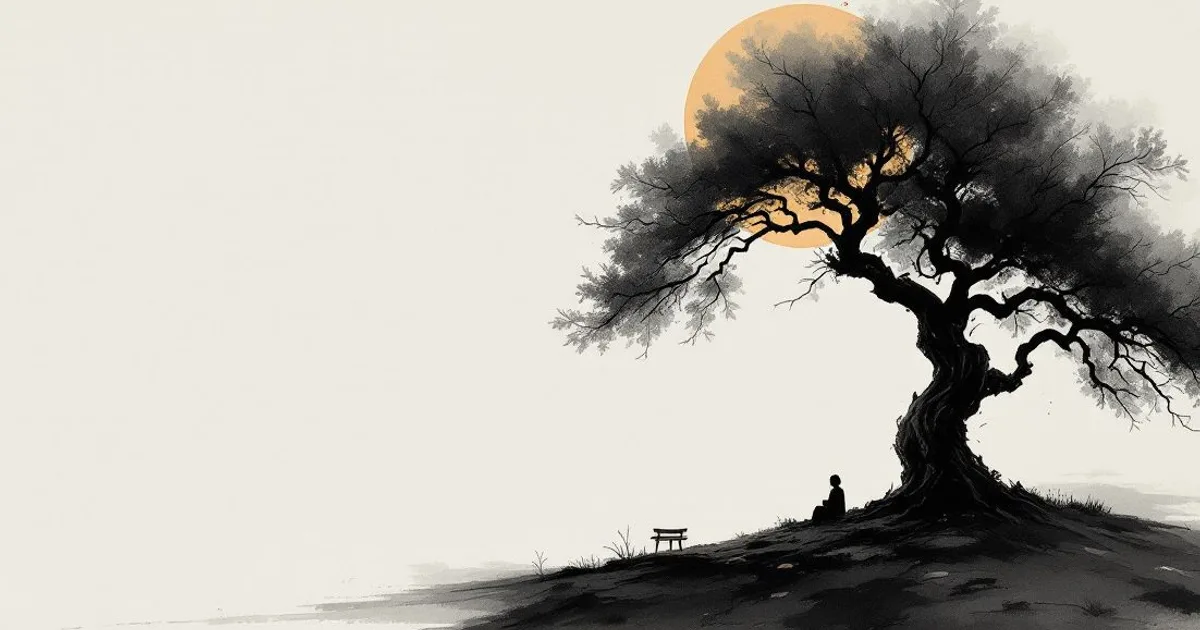
The Jataka tales are a vast collection of stories about the Buddha’s previous lives — the lifetimes before he was born as Siddhartha Gautama. In them the being who would one day become the Buddha, called the bodhisatta, is born as a human, an animal, or a deity, and in each story practises a virtue on the long road toward awakening. The classic Theravada collection traditionally holds 547 of them.
What the word “Jataka” means
Jātaka means “birth” or “birth-story.” Each tale recounts one birth of the bodhisatta — the future Buddha — somewhere in the long chain of lives that, in Buddhist thought, precedes any awakening. Underlying the whole genre is a core teaching of rebirth and karma: a Buddha does not appear from nowhere but ripens across countless lifetimes, gradually perfecting wholesome qualities until full enlightenment becomes possible. The Jatakas are the literature of that ripening.
So these are not stories about Siddhartha the prince. They reach further back — to a time when the same stream of becoming wore the form of a deer, a monkey, a merchant, a king, a tree-spirit, or a humble craftsman. For the fuller account of the historical figure these lives lead up to, see who was the Buddha?
How many Jataka tales are there?
The standard Theravada collection traditionally numbers 547 stories. The exact figure varies a little in how sources count and present it — some round it to “about 550” — but 547 is the number attached to the canonical Pali set. That set is the Jātaka book of the Pali Canon, and its verses are wrapped in a prose commentary, the Jātakatthavaṇṇanā (“Commentary on the Meaning of the Jātakas”), gathered in roughly the fifth century CE.
It helps to be honest about what is and isn’t fixed here. Within Theravada, 547 is the working total. But across the wider Buddhist world there is no single closed canon of birth-stories: later Sanskrit and Mahayana collections preserve their own tales, some overlapping with the Pali set and some not. So “how many Jatakas?” has a clean answer only if you specify which collection you mean.
Where the Jatakas sit in the Buddhist canon
In the Pali Canon, the Jātaka is the tenth book of the Khuddaka Nikāya — the “Collection of Minor (or Short) Texts” — which itself sits inside the Sutta Piṭaka, the basket of discourses. (“Minor” here means miscellaneous, not unimportant; the same collection holds the beloved Dhammapada.)
One technical point is worth getting right, because popular summaries often blur it. Strictly speaking, only the verses (gāthā) of each Jataka are treated as canonical scripture. The familiar prose narratives — the part most readers actually enjoy — belong to the commentary that grew up around those verses. This is why the Jatakas feel different from a discourse like a sutta: their canonical core is poetry, and the storytelling is largely the work of later commentators preserving and elaborating an oral tradition.
There is also a separate, much shorter book in the same Khuddaka Nikāya that is easy to confuse with the Jātaka: the Cariyāpiṭaka, the “Basket of Conduct,” the fifteenth and last book. It retells 35 birth-stories in verse, specifically to illustrate the perfections. It overlaps in spirit with the Jātaka but is its own, distinct text.
A Jataka tale’s structure
Most Jatakas follow a recognisable three-part shape, which is part of what makes them so distinctive:
- The story of the present (paccuppannavatthu) — a scene from the Buddha’s own lifetime, usually some incident among his monks or lay followers that prompts him to speak.
- The story of the past (atītavatthu) — “long ago,” the Buddha then narrates the relevant birth-story, in which the bodhisatta faces a moral test and embodies a particular virtue. This past-life tale carries the embedded verses.
- The connection (samodhāna) — the Buddha closes by identifying who’s who: “the monkey king was I; the treacherous one was Devadatta,” linking the ancient characters to people in the present.
That framing device — present, past, and the reveal that I was that one — is the signature of the genre. It turns a folk-tale into a teaching about cause, character, and continuity across lives.
The perfections: virtue across many lifetimes
The deeper purpose of the Jatakas is to show how the qualities that make a Buddha are built up, lifetime by lifetime. In the Theravada tradition these qualities are the ten perfections (pāramī, often given as pāramitā in Sanskrit): generosity (dāna), morality (sīla), renunciation (nekkhamma), wisdom (paññā), energy (viriya), patience (khanti), truthfulness (sacca), resolve (adhiṭṭhāna), loving-kindness (mettā), and equanimity (upekkhā).
Read this way, the Jatakas are a kind of moral curriculum. Each story isolates a virtue and pushes it to its limit, so that a single tale becomes a vivid lesson in what generosity, or honesty, or patience can demand. As Britannica puts it, in whatever form the bodhisatta appears — king, outcaste, deity, or animal — “he exhibits some virtue that the tale thereby inculcates.”
Three famous Jataka stories
A handful of birth-stories have become especially loved, retold for children and carved on temple walls alike.
The Vessantara Jataka — generosity
The Vessantara Jātaka is the last and most celebrated of the canonical collection (number 547), and the great parable of generosity (dāna). In it the bodhisatta is born as Prince Vessantara, who gives away whatever is asked of him — including the kingdom’s rain-bringing white elephant, his entire wealth, and, in the story’s hardest turn, even his two children and his wife. The tale presses generosity to a deliberately uncomfortable extreme, and across Theravada countries its recitation is a major devotional event. (Many readers find the giving-away of the children genuinely troubling; the tradition itself treats it as the supreme, almost unbearable test of the perfection, not as a model for family life.)
The Great Monkey King — self-sacrifice
In the Mahākapi Jātaka, the bodhisatta is born as a monkey king leading a great troop. When a human king’s soldiers trap the monkeys by a river to seize their mango tree, the monkey king stretches his own body to make a living bridge, so that his whole troop can cross to safety over his back — at the cost of his own life. In the closing connection, the treacherous monkey who breaks his back is identified as Devadatta, the Buddha’s rival. The scene was a favourite of early Buddhist sculptors and appears on the railings of Bharhut and at Sanchi.
The Hungry Tigress — compassion (a non-Pali tale)
One of the most famous birth-stories of all is the Hungry Tigress: the bodhisatta, as Prince Mahāsattva, comes upon a starving tigress too weak to feed her cubs, and offers his own body so they may live. It is essential to be accurate here: this story is not part of the canonical Pali 547. It comes from later Sanskrit / Mahayana sources — notably Āryaśūra’s Jātakamālā (“Garland of Birth-Stories”) and the Sutra of Golden Light (Suvarṇabhāsottama-sūtra). It is a genuine and revered birth-story, but it belongs to a different stream of the literature than the Theravada collection — a good reminder that “Jataka” names a whole family of tales, not one fixed book.
Why the Jatakas matter
For centuries the Jatakas have been one of Buddhism’s great teaching tools — and one of its great influences on art. Birth-stories are carved across the early stupas at Bharhut and Sanchi, painted in the cave temples of Ajanta, and sculpted in long relief sequences at Borobudur in Java. Long before most laypeople could read scripture, they learned the Dharma through these stories in stone and paint. Many of the tales also resemble older Indian fables — Britannica notes parallels with the Mahābhārata, the Pañca-tantra, and even Aesop — folk material absorbed into a Buddhist frame.
It is worth holding their nature clearly. The Jatakas are devotional and didactic literature, not eyewitness biography. They dramatise the conviction that goodness is cultivated across many lives, and they make abstract virtues unforgettable by putting them in the mouths of monkeys and kings. Whether a reader takes them as literal past lives, as parable, or as both, varies by person and by tradition — and the texts work either way.
For the figure these many lifetimes finally lead up to, see who was the Buddha?; for the worldview behind the genre, see karma in Buddhism and rebirth vs. reincarnation; and for what we can soberly say about his historical life, see the historical Buddha.
Frequently asked questions
What are the Jataka tales?
The Jataka tales are a large body of stories about the Buddha's previous lives, before he was born as Siddhartha Gautama. In them the being who would become the Buddha — the bodhisatta — appears as a human, an animal, or a deity, and in each tale practises a virtue such as generosity, patience, or honesty. The classic Theravada collection, the Jātaka of the Pali Canon, traditionally contains 547 stories.
How many Jataka tales are there?
The canonical Theravada collection, found in the Pali Canon, traditionally numbers 547 stories (some sources round this to about 550). The figure refers to the Jātaka book of the Khuddaka Nikāya, whose verses are accompanied by a prose commentary, the Jātakatthavaṇṇanā, gathered in roughly the fifth century CE. Beyond this set, other birth-stories circulate in later Sanskrit and Mahayana collections, so there is no single fixed total across all of Buddhism.
Are the Jataka tales part of the Pali Canon?
Yes. The Jātaka is the tenth book of the Khuddaka Nikāya ('Collection of Minor Texts') within the Sutta Piṭaka of the Pali Canon. Strictly, only the verses (gāthā) are treated as canonical scripture; the surrounding prose stories belong to the commentary. A separate, shorter book in the same collection — the Cariyāpiṭaka, the fifteenth and last — retells 35 birth-stories in verse to highlight the perfections.
What is the most famous Jataka tale?
The best known is the Vessantara Jātaka, the final and longest story (number 547), which illustrates the perfection of generosity. In it the bodhisatta, as Prince Vessantara, gives away everything he has — including a rain-bringing white elephant, his wealth, and even his own children — as the climactic act of generosity in his long path toward Buddhahood. It remains hugely popular across Theravada countries, often recited at festivals.
Did the Buddha really live the lives in the Jataka tales?
The Jataka tales are devotional and didactic literature, not eyewitness history. They dramatise the Buddhist idea that a future Buddha perfects virtue across countless lifetimes; many tales resemble older Indian fables and folk-tales that were adapted into a Buddhist frame. Buddhists value them for the qualities they teach — compassion, patience, generosity — rather than as a literal biography of past births. Whether to read them as fact, parable, or both varies by reader and tradition.
Sources
- Jātaka — Encyclopaedia Britannica: the stories depict the Buddha's previous incarnations; the future Buddha may appear as a king, an outcaste, a deva, or an animal, each tale inculcating a virtue; structure of present narrative, past narrative, and connection; parallels with the Mahābhārata, Pañca-tantra and Aesop
- Khuddaka Nikāya — Encyclopaedia Britannica: the Jātaka is the tenth book and the Cariyāpiṭaka ('Basket of Conduct,' 35 birth-stories in verse) the fifteenth and last book of the Khuddaka Nikāya of the Sutta Piṭaka
- Jātaka — Wikipedia (citing the Theravāda Jātakatthavaṇṇanā): the canonical Pali collection numbers 547 stories in mixed verse and prose; the verse portions are among the earliest Pali material; threefold structure paccuppannavatthu / atītavatthu / samodhāna; depicted at Bharhut, Sanchi, Ajanta and Borobudur
- Vessantara Jātaka (Jāt 547) — the final and most celebrated birth-story, illustrating the perfection of generosity (dāna): Prince Vessantara gives away the rain-bringing white elephant, his wealth, and finally his children
- Mahākapi Jātaka (the Great Monkey King) — the bodhisatta, born as a monkey king, makes a bridge of his own body to save his troop; depicted at Bharhut and Sanchi (encyclopaedic summaries; PTS Jātaka)
- Āryaśūra, Jātakamālā ('Garland of Birth-Stories'), and the Suvarṇabhāsottama-sūtra (Sutra of Golden Light) — the Sanskrit/Mahāyāna 'Hungry Tigress' story of Prince Mahāsattva, who offers his body to a starving tigress