Milarepa: Tibet's Great Yogi and Poet
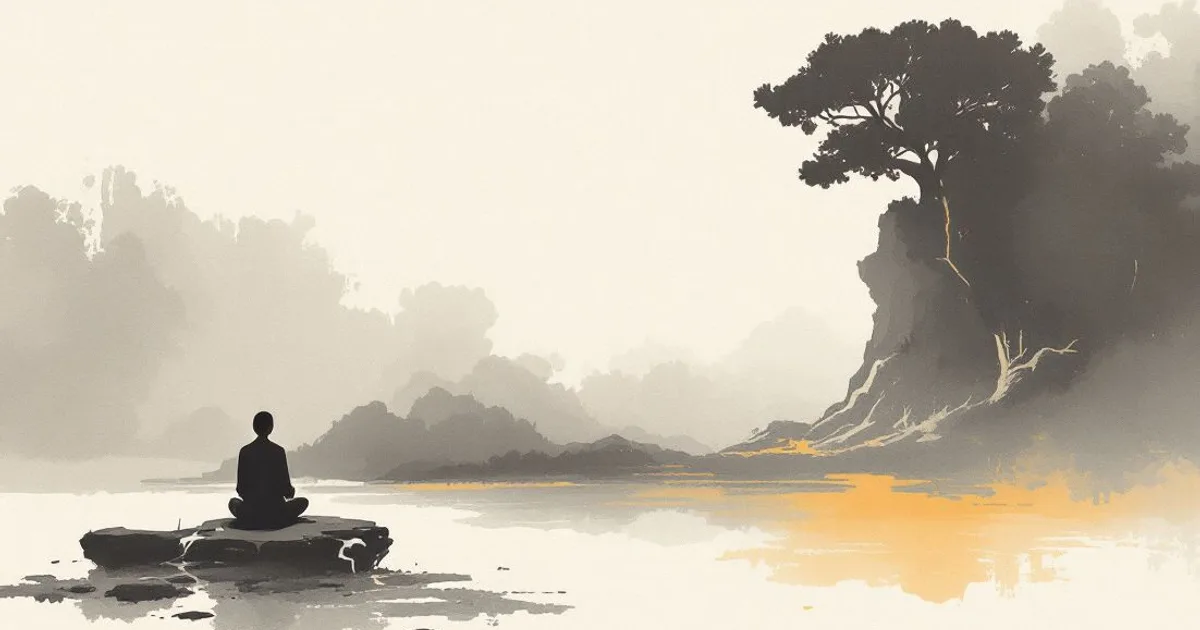
Milarepa is the most beloved saint of Tibetan Buddhism — a sorcerer turned yogi who purified the karma of a terrible youth through fierce devotion and years of solitary meditation, awakened in the caves of the Himalayas, and sang his realization in songs still treasured across the high plateau. His life is Tibet’s great story of redemption: that even the worst of us can be wholly transformed.
The short answer
Encyclopaedia Britannica calls Milarepa, “born 1040—died 1123,” “one of the most famous and beloved of Tibetan Buddhist masters.” A yogi and poet rather than a monk, he is a central figure of the Kagyu school. His biography unfolds in three movements: as a young man he “studied black magic… in an attempt to gain revenge on a wicked uncle” and killed a number of people; stricken by what Britannica calls “a crisis of conscience,” he sought out the great teacher Marpa, “founder of the Bka’-brgyud-pa (Kagyu) sect,” who put him through years of ordeals to purify his karma; he then “sought out remote, isolated mountain retreats in which he practiced rigorous meditation,” and his spontaneous “Hundred Thousand Songs” became one of the treasures of Tibetan literature. (Unfamiliar terms are in the glossary.)
In more depth
A life in three acts
The Life of Milarepa is among the most famous and best-loved biographies in all of Buddhism, and it is told deliberately as a journey — from grievous wrongdoing, through painful purification, to complete liberation. It is a story shaped to teach, and a trustworthy account should hold its historical core and its devotional embellishments a little apart. But the shape of it is unmistakable and unforgettable: sin, purification, awakening.
The sorcerer’s revenge
Milarepa was born to a prosperous family, but when his father died, an uncle and aunt seized the family’s property and reduced Milarepa, his mother, and his sister to poverty and servitude. His embittered mother urged him to revenge, and he obeyed in the most terrible way. As Britannica records, he “studied black magic in his younger years in an attempt to gain revenge on a wicked uncle” — and the traditional account tells how his sorcery brought down a house during a family gathering, killing many of those who had wronged them. The revenge was, in Britannica’s stark phrase, “successful.”
The weight of karma
And then came the turn that makes Milarepa Milarepa. Surveying what he had done — and the certainty, in the Buddhist understanding, of a hellish rebirth to follow such karma — he was seized by what Britannica calls “a crisis of conscience.” Not fear of punishment, exactly, but the unbearable knowledge of the suffering he had caused and the suffering it would bring. From that remorse grew a desperate, single-minded longing: to find a teacher who could help him purify the unpurifiable, and to do whatever it took. It is this — that he sought not to escape his karma but to transform it — that lifts the story from melodrama into something profound.
Marpa’s ordeals
He found his teacher in Marpa the Translator, a formidable lay master who had carried tantric teachings from India to Tibet. But Marpa, the traditional biography tells, saw the weight of Milarepa’s karma and refused to teach him directly. Instead he set him to brutal, baffling labour: to build, single-handed, a great stone tower — and then, when it was done, to tear it down and carry every stone back, and build again, and again, until his back was a mass of open sores. The trials, the tradition explains, were Marpa’s fierce compassion: a means of burning away Milarepa’s terrible karma through suffering and unshakeable devotion before the teachings could safely take root. Only when the purification was complete did Marpa at last transmit the full teachings — and the long, harrowing relationship between master and disciple became, in Britannica’s words, “a significant element in the biography.” (It remains the classic Tibetan image of the bond between teacher and student.)
Years in the caves
His training complete, Milarepa did what few have ever done: he gave his whole life to practice. He “sought out remote, isolated mountain retreats,” Britannica notes, “in which he practiced rigorous meditation” — withdrawing for years into freezing Himalayan caves, enduring cold and near-starvation, surviving (the legend says) on little but wild nettle soup, until his skin took on a greenish tinge. Through this ferocious solitary effort, the tradition holds, he attained complete enlightenment in a single lifetime — the supreme attainment of Vajrayana practice, and all the more astonishing in a layman who had begun as a killer. Milarepa became the great proof of what the tantric path, pursued without reserve, could accomplish.
The songs
Milarepa taught not through scholarly treatises but through song. To the students and wanderers who found him in the mountains he would sing — spontaneous verses of realization, earthy and direct and often piercingly beautiful, meeting each listener exactly where they stood. Gathered as The Hundred Thousand Songs of Milarepa, they became one of the most beloved works of Tibetan literature, carrying the deepest teachings in language a herdsman could feel and a sage could ponder. It is partly through these songs that Milarepa is loved as he is — not a remote scholar but a voice from a cave, singing the Dharma into the wind.
Why Milarepa matters
Milarepa is cherished above almost any other Tibetan figure because his life carries two pieces of immense hope. The first: that no karma is beyond purification — that even a murderer, sincerely turning, can be wholly transformed. The second: that awakening is possible in this very life, for an ordinary person, even one who began in darkness, if they practise with total devotion. A founding figure of the Kagyu lineage and the patron saint of yogis and hermits, he stands at the centre of Tibetan Buddhism as a living promise. If Milarepa, of all people, could awaken — then so, the tradition says, can we. (For the tradition he adorns, see Tibetan Buddhism; for his place among the great teachers, the most influential Buddhist teachers.)
Frequently asked questions
Who was Milarepa?
Milarepa, whom Britannica dates to 'born 1040—died 1123,' was 'one of the most famous and beloved of Tibetan Buddhist masters.' A yogi and poet rather than a monk, he is a central figure of the Kagyu school and the hero of Tibetan Buddhism's great redemption story — a man who turned from terrible wrongdoing to complete awakening through fierce devotion and years of solitary meditation.
What did Milarepa do before he became a Buddhist?
He committed grave crimes. Britannica records that he 'studied black magic in his younger years in an attempt to gain revenge on a wicked uncle' who had seized his family's property — and his sorcery killed a number of people. After these 'successful acts of destruction and revenge,' he underwent, in Britannica's words, 'a crisis of conscience,' and sought out the Dharma to purify the dreadful karma he had created.
Who was Milarepa's teacher?
Marpa the Translator, whom Britannica calls the 'founder of the Bka'-brgyud-pa (Kagyu) sect.' Their long and difficult relationship is the heart of the story: the traditional biography tells how Marpa, to purify Milarepa's karma, set him to years of harsh, seemingly pointless labour — repeatedly building and demolishing stone towers by hand — before finally transmitting the teachings.
What are the Hundred Thousand Songs of Milarepa?
They are a beloved collection of the spontaneous songs of realization that Milarepa sang to his students and visitors. Rather than write scholarly treatises, he taught in earthy, direct, often beautiful verse, and 'The Hundred Thousand Songs of Milarepa' became one of the treasures of Tibetan literature.
Why is Milarepa important?
For Tibetan Buddhists he is living proof of two things: that no karma is so heavy it cannot be purified through sincere practice, and that an ordinary person — even one who began as a murderer — can attain full awakening through total devotion. A founding figure of the Kagyu lineage and the patron of yogis and hermits, he remains an enduring symbol of hope: if Milarepa could awaken, anyone can.
Sources
- Milarepa (biography), Encyclopædia Britannica
- Vajrayāna (entry), Encyclopædia Britannica