Samatha Meditation: The Buddhist Practice of Calm
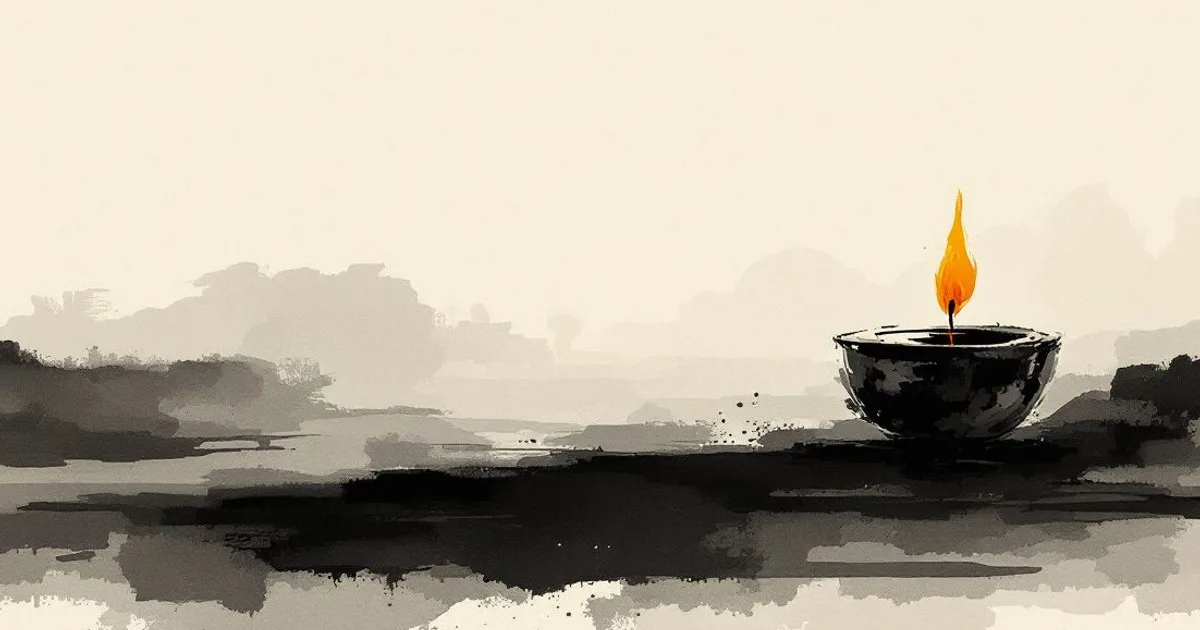
Samatha — Pāli for “calm” or “tranquillity” — is the steadying wing of Buddhist meditation: the training that gathers a scattered mind into stillness and strength. Its fruit is samādhi, the concentration that can deepen into the jhānas. The Buddha pairs it with insight; both, he says, “have a share in clear knowing.”
The short answer
In Buddhist meditation, samatha (Pāli; Sanskrit śamatha) is the cultivation of calm — a mind made steady, collected, and workable. Encyclopædia Britannica’s entry on mindfulness names the two great families of practice as “samatha (‘calming’) and vipassana (‘insight’),” and the Vijjābhāgiya Sutta (AN 2.30) sets them side by side: “These two qualities have a share in clear knowing. Which two? Tranquillity (samatha) & insight (vipassana)” (trans. Ṭhānissaro Bhikkhu). Each does a different work. When tranquillity is developed, the discourse explains, “the mind is developed,” and in turn “passion is abandoned.” Samatha, then, is not the whole of meditation but one of its two wings — the calming, concentrating side that steadies the mind so that insight can see clearly. (For the full map of practice it belongs to, see our guide to Buddhist meditation; unfamiliar terms are in the glossary.)
In more depth
What samatha trains: a gathered mind
Left to itself, the mind scatters — leaping between memory, plan, worry, and distraction. Samatha is the disciplined gathering of that scatter into one place. The quality it grows is samādhi: a unified, collected attention, the mind drawn together rather than pulled apart. (Hence the common rendering of samādhi as “concentration,” though “collectedness” or “unification” catches it better.) The two words are easy to confuse, so it is worth keeping them straight: samatha is the practice of calming, while samādhi is the steadiness it produces. You develop the one in order to deepen the other. (Concentration is also distinct from mindfulness — two different faculties that work as a pair; see mindfulness vs concentration.)
The image the tradition reaches for is water. A wind-whipped pond throws back only broken reflections; let it settle, and it grows clear and still enough to see into. Calm, in this sense, is not an end in itself but a clearing of the surface — which is exactly why the next wing of practice depends on it.
The forty subjects of calm
Calm can be developed on many objects. The classical Theravāda manual the Visuddhimagga (The Path of Purification), in Bhikkhu Ñāṇamoli’s translation, gathers forty such meditation subjects (kammaṭṭhāna) and advises the meditator to choose one suited to their own temperament. They fall into seven groups: ten kasiṇas (fields of colour and element — earth, water, fire, air, the four colours, light, and space); ten contemplations of bodily decay; ten recollections (of the Buddha, the Dhamma, the Sangha, of generosity, of death, of breathing, and more); the four “divine abidings” of loving-kindness, compassion, gladness, and equanimity; the four formless states; one perception of the repulsiveness of food; and one analysis of the body into the four elements.
The list looks forbidding, but its logic is humane: different minds settle on different objects, and the manual deliberately matches subject to temperament. Of them all, the most widely practised is mindfulness of breathing (ānāpānasati), which the Buddha calls, in the Ānāpānasati Sutta (MN 118), “of great fruit, of great benefit” (trans. Ṭhānissaro Bhikkhu). The breath has a special place because it serves both wings of practice: it steadies the mind as a calming subject, and the very same attention can later be turned toward insight.
The jhānas: a path of stages
As calm deepens, the tradition maps a series of absorptions. Britannica notes “Four stages, called (in Sanskrit) dhyanas or (in Pali) jhanas,” each a further settling of attention, beyond which lie four more “spiritual exercises, the samapattis (‘attainments’).” This is why Buddhism describes meditation as a path, leading “through a succession of stages.” The names are not a ladder of trophies to be collected but a map of how a gathered mind grows quieter and more luminous by degrees. It is worth knowing, too, that traditions differ in how much weight they place on attaining the jhānas — some treat them as essential to the path, others as helpful but not obligatory — and that honest disagreement runs through Buddhist meditation to this day. (For these absorptions in detail — the five factors of the first jhāna, how the deeper stages shed them, and the live debate over how absorbed jhāna must be — see our guide to the jhānas.)
Right concentration on the Eightfold Path
Samatha is not a sideline to the Buddhist path; it is built into it. The eighth factor of the Noble Eightfold Path is right concentration (sammā-samādhi), and the Magga-vibhaṅga Sutta (SN 45.8) defines it precisely as the four jhānas: “There is the case where a monk — quite withdrawn from sensuality, withdrawn from unskillful (mental) qualities — enters & remains in the first jhana” (trans. Ṭhānissaro Bhikkhu), on through the second and third to the fourth, “purity of equanimity & mindfulness.” “This,” the discourse concludes, “is called right concentration.” To cultivate samatha, in other words, is to train one whole limb of the path the Buddha taught — which is a useful corrective to the modern habit of treating calm as mere relaxation. (Those “unskillful (mental) qualities” the meditator withdraws from are, above all, the five hindrances — sensual desire, ill will, sloth and torpor, restlessness and worry, and doubt.)
Why calm is not the goal
For all its value, calm is a means, not the destination. The same Vijjābhāgiya Sutta that praises tranquillity is careful to give it a partner. Calm “develops the mind” and abandons passion; insight “develops discernment” and abandons ignorance (AN 2.30, trans. Ṭhānissaro Bhikkhu). A serene mind that never turns to look clearly at experience has soothed itself but not freed itself. This is the standing Buddhist caution against mistaking a pleasant, peaceful state for awakening: samatha settles the water; vipassanā is the seeing into its depths. The two are meant to work together, and most traditions cultivate them as a pair — in differing balances, and sometimes in a different order, but always as partners rather than rivals. (On how to weigh the two, and where to begin, see samatha vs vipassanā.)
Beginning samatha
You do not need the jhānas, or any exotic attainment, to begin. The most natural doorway is the breath: rest attention lightly on it, and return each time the mind wanders — that returning is the gathering of calm. Our step-by-step guide to meditating walks through the method, and you can keep time with the free meditation timer. Start with a few minutes a day and let the steadiness grow on its own; calm, like any good habit, is built quietly and kept gently.
Frequently asked questions
What is samatha meditation?
Samatha (Pali for 'calm' or 'tranquillity') is the calming wing of Buddhist meditation: the training that steadies and unifies a scattered mind. Its fruit is samadhi (concentration), which can deepen into the jhanas, states of meditative absorption. In the early texts it is the partner of vipassana (insight): the Buddha says both 'have a share in clear knowing' (AN 2.30). Calm settles the mind so that insight can see clearly.
What is the difference between samatha and samadhi?
Samatha is the practice — the cultivation of calm; samadhi is what it produces — a collected, unified, concentrated mind. The deepest states of samadhi are called the jhanas. Put simply, you practise samatha in order to develop samadhi. The two words are closely linked and sometimes used loosely, but it helps to keep the practice (samatha) distinct from the steadiness it grows (samadhi).
What are the forty meditation subjects?
The classical Theravada manual the Visuddhimagga lists forty objects (kammatthana) on which calm can be developed — among them the ten kasinas (discs of colour and element), mindfulness of breathing, the recollections, the four divine abidings (loving-kindness and its companions), and the four formless states. A practitioner chooses one suited to their temperament. Mindfulness of breathing is the most widely used.
Do you have to reach jhana to practise samatha?
No. Samatha is a spectrum, not a pass-or-fail attainment: any steadying of attention is calm being developed, long before the deep absorptions of the jhanas. Traditions differ on how far to pursue the jhanas, and many practitioners cultivate a settled, workable calm without claiming them. The point is a mind steady enough to see clearly, not the collection of exotic states.
Is samatha the same as mindfulness?
Not quite. Mindfulness (sati) is the quality of clear, present attention; samatha is the calm and unification that such attention can grow into. Mindfulness of breathing, for instance, is both — it steadies the mind (samatha) and can be turned toward insight (vipassana). Samatha names specifically the calming, concentrating side of practice.
Sources
- Vijjābhāgiya Sutta (AN 2.30), Access to Insight (trans. Ṭhānissaro Bhikkhu)
- Magga-vibhaṅga Sutta (SN 45.8), Access to Insight (trans. Ṭhānissaro Bhikkhu)
- Ānāpānasati Sutta (MN 118), dhammatalks.org (trans. Ṭhānissaro Bhikkhu)
- Visuddhimagga (The Path of Purification), trans. Bhikkhu Ñāṇamoli, Buddhist Publication Society
- Buddhist meditation (entry), Encyclopædia Britannica
- Mindfulness (entry), Encyclopædia Britannica