Shoshin: The Zen Beginner's Mind
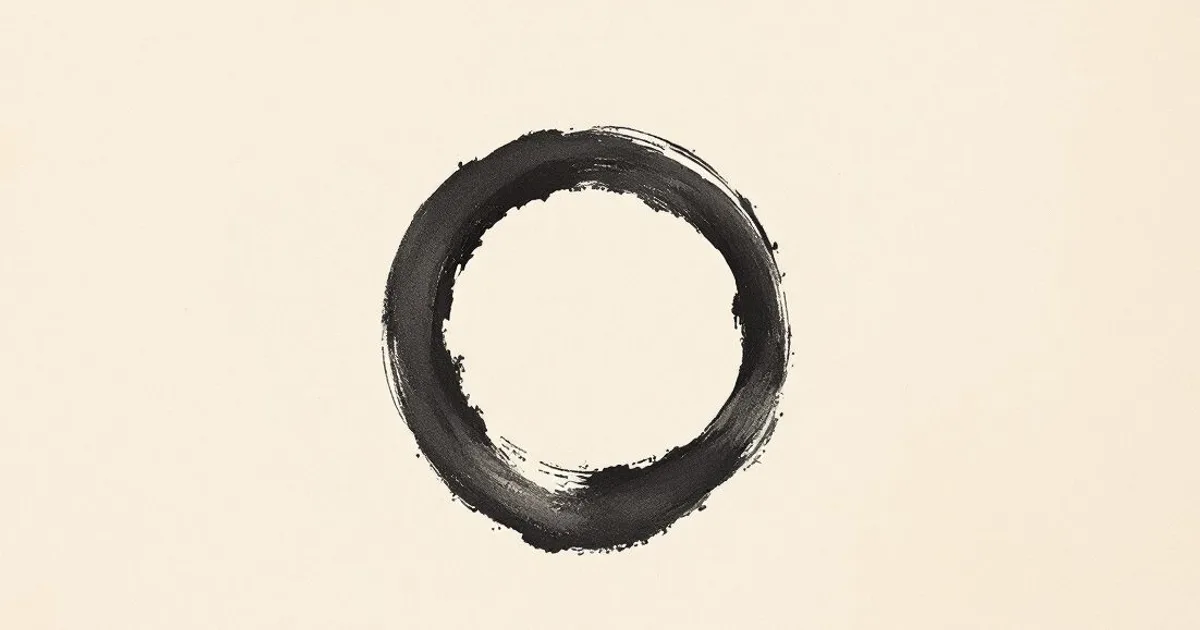
Shoshin (Japanese 初心, “beginner’s mind”) is a genuinely Zen Buddhist idea: meeting each moment, each task, each teaching with the openness and curiosity of someone encountering it for the first time — even when you are not a beginner at all. Unlike some terms bundled into “Eastern wisdom,” this one is authentically Buddhist, rooted in Zen.
The short answer
Shoshin combines two characters — sho (初), “beginner” or “initial,” and shin (心), “mind” — and names an attitude of openness, eagerness, and lack of preconceptions in study and practice, held even at an advanced level. The paradox it points to is simple and uncomfortable: the more expert you become, the more easily your mind closes. You stop seeing the thing in front of you and start seeing only your idea of it.
The concept was taught in the thirteenth century by Dōgen, the founder of the Japanese Sōtō Zen school, and discussed in his great collection, the Shōbōgenzō. It reached the modern West chiefly through one slim, much-loved book: Shunryū Suzuki’s Zen Mind, Beginner’s Mind (Weatherhill, 1970). Its keynote line has become one of the most quoted sentences in Western Zen: “In the beginner’s mind there are many possibilities, but in the expert’s there are few” — explored on its own page, “in the beginner’s mind, many possibilities”. (Another beloved Suzuki line: “you are perfect as you are … and you can use a little improvement”.)
So this is not a recent wellness coinage dressed up in Japanese. It is a real Zen teaching about how to keep the mind awake — closely tied to two things at the heart of Buddhist practice: non-attachment to views, and mindfulness. (Unfamiliar terms are in the glossary.)
In more depth
Where shoshin comes from
Beginner’s mind is woven into the spirit of Zen long before it had a catchphrase. Zen’s whole temper is to distrust the accumulation of cleverness and to prize direct, fresh seeing — “pointing directly to the human mind,” as the tradition puts it. The thirteenth-century master Dōgen, who founded Sōtō Zen and is one of the most original thinkers in Buddhist history, taught the value of the beginner’s heart and returned to it in his writing. For Dōgen, practice was never something you finished and then possessed; awakening and practice are one continuous, present activity, which means the attitude of the first day is also the attitude of the ten-thousandth.
The phrase entered English vocabulary through Shunryū Suzuki (1904–1971), a Japanese priest of the Sōtō lineage who came to the United States in 1959, founded the San Francisco Zen Center, and became one of the most influential teachers in the transmission of Zen to the West. You can read more about his life and influence in our profile of Shunryū Suzuki. His talks were recorded and transcribed by students, and edited by Trudy Dixon and Richard Baker into Zen Mind, Beginner’s Mind — published the year before his death and never out of print since.
The famous line, in his own words
Because the wording matters, here it is exactly. Suzuki wrote:
“In the beginner’s mind there are many possibilities, but in the expert’s there are few.”
That is the whole teaching in a single sentence. The beginner does not yet know what is “impossible,” so everything is open; the expert has narrowed the field to what they have decided is worth considering. Suzuki is not romanticising ignorance — he is not saying it is better to know nothing. He is pointing at a specific trap that expertise sets: the way knowledge hardens into assumption, and assumption quietly closes the door on what is actually happening now.
It helps to read the famous line beside another from the same book — one of Suzuki’s gentle reversals: “The most difficult thing is always to keep your beginner’s mind.” Beginner’s mind is not the easy, default state of the novice. It is a discipline, and a harder one the more you learn.
Why expertise closes the mind
Why would knowing more make you see less? Because the mind is an efficiency machine. Once it has filed something under “I understand this,” it stops looking and starts retrieving. That is enormously useful — it is how you drive a car or read a sentence without re-learning either. But the same shortcut, applied to a person, a problem, a moment of meditation, or a teaching you have heard a hundred times, replaces the living thing with a stored summary of it. You meet your label, not the reality.
This is why genuine masters in many fields speak of staying a “perpetual student,” and why shoshin is especially prized in Zen and in the Japanese martial arts, where a black belt is encouraged to keep the mind of a white belt. The practice acts as a deliberate counterweight to the pride and closed-mindedness that quietly arrive with competence.
Shoshin and non-attachment to views
Here is where shoshin connects to the deeper Buddhist current beneath it. The Buddha repeatedly warned against clinging — and clinging is not only to pleasures and possessions but to views, to opinions, to our fixed positions about how things are. To grip a view tightly is to stop being able to learn; the mind that already “knows” cannot receive.
Beginner’s mind is the practical, moment-to-moment expression of that teaching. It is non-attachment turned toward the contents of your own head: a willingness to hold what you think you know a little more loosely, so that reality can correct you. This is not the same as having no knowledge or no discernment — Buddhism is full of careful analysis. It is a refusal to let yesterday’s understanding harden into a wall you can no longer see past. In that sense shoshin is humility with a method.
Shoshin and mindfulness
Beginner’s mind and mindfulness are close companions, and they strengthen each other. Mindfulness is clear, present-moment awareness — noticing what is actually here. Shoshin is the quality of that noticing: attention that has put down the filter of “I already know what this is.” You can be technically attentive and still bored, because the expert’s mind has pre-decided that nothing new is on offer. Beginner’s mind reopens the question.
Many contemporary teachers of mindfulness draw on shoshin explicitly, treating “beginner’s mind” as one of the attitudes that make awareness fruitful rather than mechanical — meeting this breath as a first breath, this taste, this sound, this feeling, as if it had not happened a thousand times before. Approached that way, even an ordinary moment regains some of its strangeness and depth.
How to practise beginner’s mind
Shoshin is less a technique than a repeated, gentle gesture you can make anywhere:
- Catch the label. Notice the instant your mind stamps an experience “familiar,” “boring,” or “I know this,” and treat that stamp as a signal to look again, not a conclusion to act on.
- Return to the first breath. In meditation, meet each breath as if it were the first one you had ever noticed. The aim is not novelty for its own sake but freshness — the breath is, in fact, new each time.
- Listen past your answer. In conversation, especially with someone you disagree with, hold off on the rebuttal already forming and actually receive what is being said. Most of us listen for the gap in which to reply; beginner’s mind listens for what is there.
- Re-meet the familiar. Look at a person you love, a street you walk daily, a teaching you have read many times, as if encountering it for the first time. Familiarity is not the same as understanding.
- Let “I don’t know” be comfortable. Beginner’s mind is at ease with not-knowing. That ease, not certainty, is what keeps the door of learning open.
None of this requires becoming naive or discarding hard-won skill. The point is the opposite: to let your skill stay alive by refusing to let it calcify into assumption.
A real Zen teaching, honestly framed
It is worth saying plainly, because so much “Eastern wisdom” online is mislabelled: shoshin is the real thing. It is not a marketing word borrowed from a culture, nor a generic life-hack with an exotic name. It is a Zen Buddhist teaching with a clear lineage — from Dōgen in the thirteenth century to Suzuki Roshi in the twentieth — and it carries the full weight of the tradition’s view of mind, attachment, and awakening.
What makes it travel so well is that you do not have to be a Buddhist to feel its truth the moment you test it: try meeting the next ordinary thing as if you had never met it, and notice how much you had stopped seeing. That is beginner’s mind. As Suzuki reminds us, the hard part is not reaching it once but keeping it — which is, in the end, simply another name for staying awake. (For more concepts gathered under that label, see our overview of Eastern wisdom; for the tradition this belongs to, our guide to Zen Buddhism.)
Frequently asked questions
What does shoshin mean?
Shoshin (Japanese 初心) means 'beginner's mind.' It combines sho (初, 'beginner' or 'initial') and shin (心, 'mind'). It names an attitude of openness, eagerness, and freedom from preconceptions when you study or practise — meeting each moment as if for the first time, even when you are far from a beginner.
Is shoshin actually Buddhist?
Yes. Shoshin is a genuine Zen Buddhist concept, not just a lifestyle slogan. It was taught in the thirteenth century by Dōgen, founder of the Sōtō Zen school, and was made famous in the West by the Sōtō Zen teacher Shunryū Suzuki in his 1970 book 'Zen Mind, Beginner's Mind.'
Who said 'In the beginner's mind there are many possibilities'?
The Sōtō Zen teacher Shunryū Suzuki (1904–1971). The full line from his 1970 book 'Zen Mind, Beginner's Mind' is: 'In the beginner's mind there are many possibilities, but in the expert's there are few.'
How is shoshin different from mindfulness?
They overlap but are not identical. Mindfulness is clear, present-moment attention; shoshin is the quality of that attention — meeting what you notice without the filter of 'I already know this.' Beginner's mind is mindfulness stripped of the expert's assumptions, which is part of why the two are often practised together.
How do you practise beginner's mind?
By noticing when you label an experience 'familiar' and gently setting that label down — looking again as if you had never seen it. In meditation it means returning to the breath as a first breath; in daily life it means listening to a person or idea without rushing to your conclusion. It is a deliberate loosening of the grip of what you think you already know.
Sources
- Shunryū Suzuki, 'Zen Mind, Beginner's Mind' (Weatherhill, 1970)
- Shoshin (entry), Wikipedia
- Zen Mind, Beginner's Mind (entry), Wikipedia
- Zen Mind, Beginner's Mind, Shambhala Publications (publisher page)
- Zen Mind, Beginner's Mind, San Francisco Zen Center