Singing Bowls: How to Use Them for Meditation

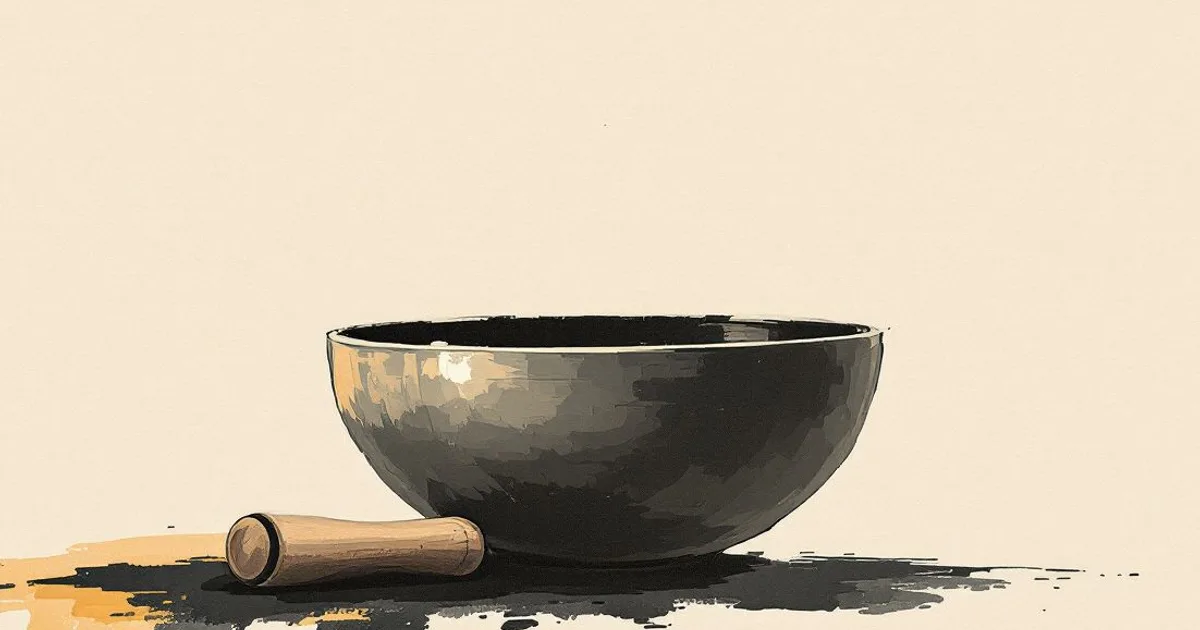
A singing bowl is a metal bowl that gives off a sustained, resonant tone — you either strike its side with a padded mallet for a single bell-like note, or rub the mallet steadily around the outer rim until a continuous hum builds. In meditation it is used to mark the start or end of a sitting, gather scattered attention, or simply provide a calming sound. You do not need one to meditate; it is an aid, not a requirement.
This guide covers how to play one properly, how to use it in practice — and, honestly, where these bowls really come from, because the popular “ancient Tibetan” story does not hold up.
How to Use a Singing Bowl (Two Methods)
There are two distinct ways to play a singing bowl, and they suit different moments.
Method 1 — Strike it (a single bell tone)
This is the simplest and most common use: one clear note to open or close a period of meditation.
- Rest the bowl on a flat surface, a small cushion, or your flat open palm. Resting it on a cushion lets the rim vibrate freely and ring longer.
- Hold the padded mallet loosely, near its middle.
- Tap the outside of the bowl gently, about a third of the way down from the rim — not the very top edge. Let the mallet bounce off rather than pressing it in.
- Listen until the sound fades completely. That fading tail is the point: following the sound all the way into silence is itself a small concentration exercise.
Strike once at the beginning of your sitting and once at the end. A soft, single tone is far more effective than a loud one.
Method 2 — Play the rim (the continuous “singing” tone)
This is the sustained hum the bowls are named for. It takes a little practice.
- Rest the bowl on your open, flat palm (for a small bowl) or on a cushion (for a larger one). Don’t grip it or curl your fingers over the edge — your hand will mute the tone.
- Hold the mallet like a pen, and press the side of the mallet flat against the outside of the rim.
- Move the mallet smoothly around the rim in a full circle — all the way around, in one direction, not back and forth. Use even pressure and a moderate, steady speed, as if drawing a slow circle with a crayon.
- Keep going. The tone builds over a few seconds through friction and grows into a clear, ringing hum.
- If it rattles, chatters, or the mallet skips, you are going too fast or pressing too lightly — slow down and press a little more firmly until the sound smooths out.
It is the same physics that makes a wet finger “sing” around the rim of a wine glass: the mallet alternately grips and slips against the metal (a stick-slip motion), and that vibration is what you hear. A bare wooden mallet gives a brighter, higher sing; a leather- or suede-wrapped one gives a softer, rounder tone.
How to Use One in a Meditation Session
A singing bowl earns its place by doing a few simple jobs well:
- To begin: strike the bowl once, settle your posture, and let the sound dissolve before you turn to the breath. The fading tone is a natural cue to let the day’s busyness fall away.
- To gather a wandering mind: if you notice attention has scattered, a single soft strike can act as a gentle “reset” — a sound to come back to, then return to your object of meditation.
- To end: one final strike marks the close, so the sitting has a clear beginning and end rather than just trailing off.
- As a timer or sound object: some people sit and simply listen to a long rim-played tone from start to finish, using the sound itself as the anchor for attention.
If you would like to try this without buying anything, we built a free virtual singing bowl you can play in your browser. It is a perfectly good way to experiment with using a tone to open and close a sitting before deciding whether you want a physical bowl.
None of this is a substitute for the actual skills of meditation. If you are starting out, the bowl is a pleasant accessory to — not a replacement for — learning how to meditate and building a steady practice.
The Honest History: Are “Tibetan Singing Bowls” Really Tibetan?
Here we have to be straight with you, because the marketing and the romantic stories around these bowls are mostly not true — and a site about Buddhism should say so kindly but plainly.
Despite the “Tibetan singing bowl” name and a great deal of mystical storytelling, there is no reliable historical evidence that these bowls were traditionally used for “singing” in Tibetan Buddhist meditation or ritual. This is the considered view of scholars who have actually looked, and of many Tibetans themselves.
A few specifics worth knowing:
- They aren’t really Tibetan, and they are Himalayan bowls. Most are made today in Nepal and northern India. As a religious-studies scholar writing for the Buddhist journal Tricycle puts it, “There is no hard evidence that the sound bowls are ancient—and even less that they are Tibetan.”
- They don’t appear in catalogues of Tibetan ritual instruments. A detailed scholarly catalogue of the instruments used in Tibetan ritual lists many items — bells, drums, horns, cymbals — and no sound bowls.
- Old records of Tibetan music are silent about them. Travellers and observers who documented Tibetan music in detail (for instance Perceval Landon, who visited in 1903–04) make no mention of singing bowls. As Wikipedia’s survey of the topic states, “the manufacture and use of bowls specifically for the purpose of ‘singing’… is believed to be a modern phenomenon.”
- Tibetan teachers have said as much. Tibetan monks and lamas have reported never having seen bowls “played” this way in Tibet, and have pushed back publicly on the idea that the practice is part of their tradition.
- The “singing” use is modern and largely Western. The first written record points to the early 1970s — the 1972 album Tibetan Bells by musicians Henry Wolff and Nancy Hennings helped launch Western fascination with the sound. The meditative and “sound-healing” uses we see today grew up substantially in the West in the later 20th century, not in old Tibet.
The likeliest honest picture is this: these are everyday and ritual metal vessels from the Himalayan region — beautiful, well-made bowls — that were re-imagined, renamed, and marketed as ancient Tibetan instruments to suit a modern Western appetite for the exotic and the spiritual. The “Bon-Po shamanic origin” story you’ll often read has no solid evidence behind it either.
Why we tell you this
Not to spoil anything — a singing bowl is still a lovely object that makes a genuinely calming sound. We say it because trust matters more than romance. Buddhism, at its best, is about seeing things as they actually are rather than as we’d like them to be, and that honesty extends to the props we use. You can enjoy a singing bowl fully without the false history. (For the wider tradition the name borrows from, see our overview of Tibetan Buddhism — where the bowls, notably, do not feature.)

What About “Sound Healing”?
Many people find the sustained tone of a bowl relaxing and absorbing, and that calming, focusing effect is real and worth having. The stronger claims — that particular frequencies “tune” your organs, balance your energy centres, or cure illness — are not supported by good evidence, and they belong to a modern wellness movement rather than to traditional Buddhist teaching. Our suggestion: take the bowl for exactly what it plainly is — a focusing, soothing sound — and you’ll never be misled.
Do You Even Need a Singing Bowl?
No. The Buddha taught a path of ethics, meditation, and wisdom; he said nothing about bowls. Countless meditators sit beautifully with no equipment at all — a phone timer rings just as well to open and close a sitting. A singing bowl is an aid that some people find genuinely helpful and pleasant, and there is nothing wrong with using one. Just hold it lightly: the practice is in the mind, not the metal.
Buying and Caring for a Bowl (Briefly)
If you decide you’d like one:
- Listen before you buy if you can. The “right” bowl is simply one whose tone you like and find easy to play; there is no need to chase a particular note or a costly “antique.”
- Play it before you trust a seller’s story. A bowl that’s easy to strike and to rim, and that you enjoy hearing, is a good bowl — regardless of any romantic provenance attached to it.
- Mind the mallet. A bare wooden mallet sings brighter; a padded (leather or suede) one sings softer. Most bowls come with one; you can buy others to change the sound.
- Keep it simple to care for. Wipe it clean and store it where it won’t get knocked or scratched. There is no ritual maintenance required.
In Short
A singing bowl is a simple, beautiful tool: strike it for a single clear tone, or play the rim for a continuous hum, and use either to open, focus, or close your sitting. Enjoy the sound — but hold the “ancient Tibetan” story loosely, because the honest history is more modern and more Western than the marketing suggests. If you’re new to all of this, the bowl is a small flourish on a much larger path; start with Buddhism for beginners and a basic meditation practice, and let the rest follow. For unfamiliar terms, our glossary is always there to help.
Frequently asked questions
How do you use a singing bowl for meditation?
Two ways. To mark the start or end of a sitting, strike the side once with the padded mallet for a single bell-like tone, and listen until it fades. To produce the continuous 'singing' sound, rest the bowl on your open palm or a cushion and press the mallet firmly against the outer rim, then move it steadily and slowly all the way around the rim with even pressure. The friction builds a sustained hum. You do not need a bowl to meditate — it is simply an aid for gathering and settling attention.
How do you make a singing bowl 'sing'?
Hold the mallet like a pen, press its side flat against the outside of the rim, and move it around the rim in a smooth circle — even pressure, moderate speed, the whole way round, not back and forth. It is the same stick-slip friction that makes a wet finger sing on a wine glass. The tone takes a few seconds to build, so keep going steadily; if it rattles or the mallet skips, slow down and press a little more firmly. A wooden mallet gives a brighter sing; a suede- or felt-wrapped one gives a softer, rounder tone.
Are 'Tibetan singing bowls' actually Tibetan?
Not in the way the name suggests. They are Himalayan metal bowls, and most are made today in Nepal and northern India. Scholars and Tibetan teachers alike point out there is no reliable historical evidence that bowls were traditionally used for 'singing' in Tibetan Buddhist meditation or ritual — catalogues of Tibetan ritual instruments do not include them, and old accounts of Tibetan music are silent about them. Their meditative and 'sound-healing' use is largely a modern, substantially Western development from the later 20th century. The 'Tibetan' label is mostly marketing.
Do singing bowls have real healing powers?
Many people find the sustained tone calming, pleasant, and a useful focus for settling the mind — that experience is genuine and worth having. But the stronger claims of 'sound healing' (that specific frequencies tune your organs, balance energy, or cure illness) are not established by good evidence, and the practice is modern rather than an ancient transmitted tradition. Enjoy a singing bowl for what it plainly is — a beautiful, focusing sound — without needing to believe more than that.
Which mallet should I use, and which side?
Use the padded or wooden mallet that comes with the bowl. For a single struck tone, tap the outside of the bowl about a third of the way down from the rim. For the continuous 'singing' tone, use the mallet against the outer rim. A bare wooden mallet produces a brighter, higher sing; a leather- or suede-wrapped mallet produces a softer, lower one. Start gently — you can always add pressure, but a hard strike on a thin bowl can sound harsh.
Sources
- Samuel M. Grimes (Assistant Professor of Religious Studies, Fairfield University), 'Tibetan Singing Bowls: Where Did They Really Come From?', Tricycle — 'There is no hard evidence that the sound bowls are ancient—and even less that they are Tibetan'; notes Daniel A. Scheidegger's catalogue of Tibetan ritual instruments lists none, and that the first written record is the 1972 album 'Tibetan Bells' by Henry Wolff and Nancy Hennings
- 'Standing bell', Wikipedia — 'the manufacture and use of bowls specifically for the purpose of singing is believed to be a modern phenomenon'; historical accounts of Tibetan music (e.g. Perceval Landon, 1903–04) make no mention of singing bowls; describes both playing techniques (striking, and rotating a wand around the rim via the stick-slip mechanism)