Tsongkhapa: Founder of the Gelug School
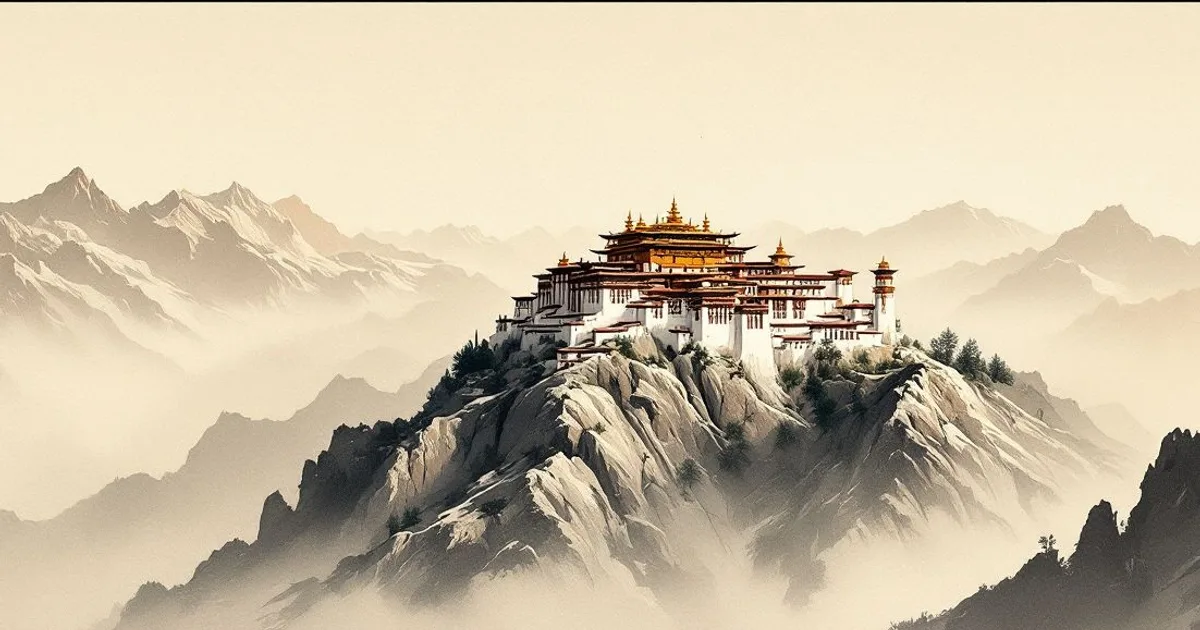
Tsongkhapa (1357–1419) was a great Tibetan reformer and scholar who founded the Gelug (“Virtuous”) school of Tibetan Buddhism — the tradition of the Dalai Lamas. His monumental Great Treatise on the Stages of the Path systematised the whole of Buddhist practice, and the monastery he founded at Ganden in 1409 became his tradition’s seat. He is among the most influential teachers in Buddhist history.
The short answer
Tsongkhapa is the great reformer of late Tibetan Buddhism. Living at a time when the tradition was rich but, in his view, in need of renewed rigour, he insisted on a return to careful scholarship, sound philosophy, and strict monastic discipline — and out of that reforming impulse grew a new school, the Gelug, which would become the largest and most institutionally powerful in Tibet. A prodigious scholar, he left a vast body of writing, above all his Great Treatise on the Stages of the Path (Lamrim Chenmo), which carried forward the graded-path tradition that Atisha had begun three centuries earlier. From his school would later come the line of the Dalai Lamas. (Unfamiliar terms are in the glossary.)
The reformer-scholar
Tsongkhapa was born in 1357 in the Tsongkha region of Amdo, in northeastern Tibet — his name means, simply, “the man from Tsongkha.” From a young age he showed exceptional gifts, and he studied intensively across the existing schools of Tibetan Buddhism, mastering both their philosophy and their tantric practice under many teachers.
What set him apart was a reforming seriousness. He held that authentic practice had to rest on a solid foundation of ethical discipline and rigorous study — that meditation and tantra were no substitute for a clear understanding of the Buddhist path and a disciplined monastic life. This insistence on scholarship and the Vinaya (monastic rule) became the hallmark of the movement he founded, whose followers were first called Gandenpa and later Gelugpa, “the virtuous ones.” His collected works run to around eighteen volumes — a monument of Tibetan scholarship.
The Great Treatise
His most celebrated work is the Lamrim Chenmo, the “Great Treatise on the Stages of the Path to Enlightenment,” completed in 1402. It is a vast, systematic exposition of the entire Buddhist path, laid out as a graded sequence from the foundations of practice up to the highest realisations — a work of immense learning that weaves together sutra and reasoning into a single, ordered whole.
Crucially, the Great Treatise stands directly in the lineage of Atisha: it takes up the “stages of the path” (lamrim) tradition that Atisha’s short Lamp for the Path had begun in the 11th century, and expands it into its definitive form. Where Atisha wrote sixty-seven verses, Tsongkhapa wrote a multi-volume masterwork — but the through-line is unmistakable. (Do not confuse the two men: they lived about 350 years apart, and Tsongkhapa inherited and enlarged Atisha’s tradition rather than sharing his era.)
Ganden and the Gelug
Tsongkhapa’s reform took institutional form in 1409, a pivotal year. In it he founded Ganden Monastery near Lhasa, which became the principal seat of his new school — so much so that its abbots, the Ganden Tripa (“holders of the throne of Ganden”), have led the Gelug ever since. In the same year he established the great Mönlam Chenmo, the Great Prayer Festival, at Lhasa, gathering monks for communal prayer at the new year — an observance that became one of the central events of the Tibetan religious calendar.
From Ganden the Gelug spread rapidly, founding the other great monastic universities around Lhasa and growing into the dominant school of Tibetan Buddhism. Its emphasis on study, debate, and discipline — Tsongkhapa’s legacy — shaped the education of Tibetan monks for centuries.
The Gelug and the Dalai Lamas
The Gelug is best known in the wider world as the school of the Dalai Lamas — but here a common misunderstanding needs correcting. Tsongkhapa did not found the Dalai Lama lineage, which arose later, from within the school he created. His disciple Gendün Drupa was only retrospectively counted as the First Dalai Lama, and the title “Dalai Lama” itself was not conferred until the 16th century, long after Tsongkhapa’s death in 1419. So the sequence is: Tsongkhapa founded the Gelug; the institution of the Dalai Lamas emerged out of it in the generations that followed.
That distinction aside, the line from Tsongkhapa to the modern Dalai Lama is direct and real. In founding the Gelug, he shaped the tradition that would come to lead Tibet both spiritually and, for centuries, politically — one of the most consequential acts in all of Buddhist history. For the school he founded, see the four schools of Tibetan Buddhism; for the master whose path he completed, Atisha; and for his most famous heirs, the Dalai Lama and the great teachers of Buddhist history.
Frequently asked questions
Who was Tsongkhapa?
Tsongkhapa (1357–1419) was a great Tibetan reformer, scholar, and teacher who founded the Gelug ('Virtuous') school of Tibetan Buddhism — the tradition to which the Dalai Lamas and Panchen Lamas belong. Renowned for his vast learning and his insistence on sound scholarship and monastic discipline, he wrote the Lamrim Chenmo, the 'Great Treatise on the Stages of the Path,' and founded Ganden Monastery in 1409.
What is Tsongkhapa famous for?
For founding the Gelug school and for his monumental writings. His Lamrim Chenmo (Great Treatise on the Stages of the Path to Enlightenment), completed in 1402, systematised the entire Buddhist path, building on Atisha's lamrim tradition. He is remembered as a reformer who raised the standards of study and discipline in Tibetan monasticism, and his collected works run to around eighteen volumes.
Did Tsongkhapa found the Dalai Lama lineage?
No — the Dalai Lama institution arose later, from within the Gelug school he founded. Tsongkhapa was the teacher of Gendun Drupa, who was only retrospectively counted as the First Dalai Lama; the title 'Dalai Lama' itself was conferred in the 16th century, long after Tsongkhapa's death. So Tsongkhapa founded the school; the Dalai Lama lineage emerged from it afterward.
What is the difference between Atisha and Tsongkhapa?
They lived about 350 years apart and both shaped the 'stages of the path' tradition. Atisha (c. 982–1054) was the Indian master whose short 'Lamp for the Path' began the lamrim genre. Tsongkhapa (1357–1419) inherited and vastly expanded that tradition in his Great Treatise, and founded the Gelug school. Atisha planted the seed; Tsongkhapa grew it into one of Tibetan Buddhism's four great schools.
Sources
- Encyclopædia Britannica — 'Tsong-kha-pa'
- Thupten Jinpa, 'Tsongkhapa: A Buddha in the Land of Snows' (Shambhala, 2019)
- Tsong-kha-pa, 'The Great Treatise on the Stages of the Path to Enlightenment (Lamrim Chenmo),' trans. Lamrim Chenmo Translation Committee (Snow Lion, 2000–2004)