Xuanzang: The Monk Who Journeyed to India
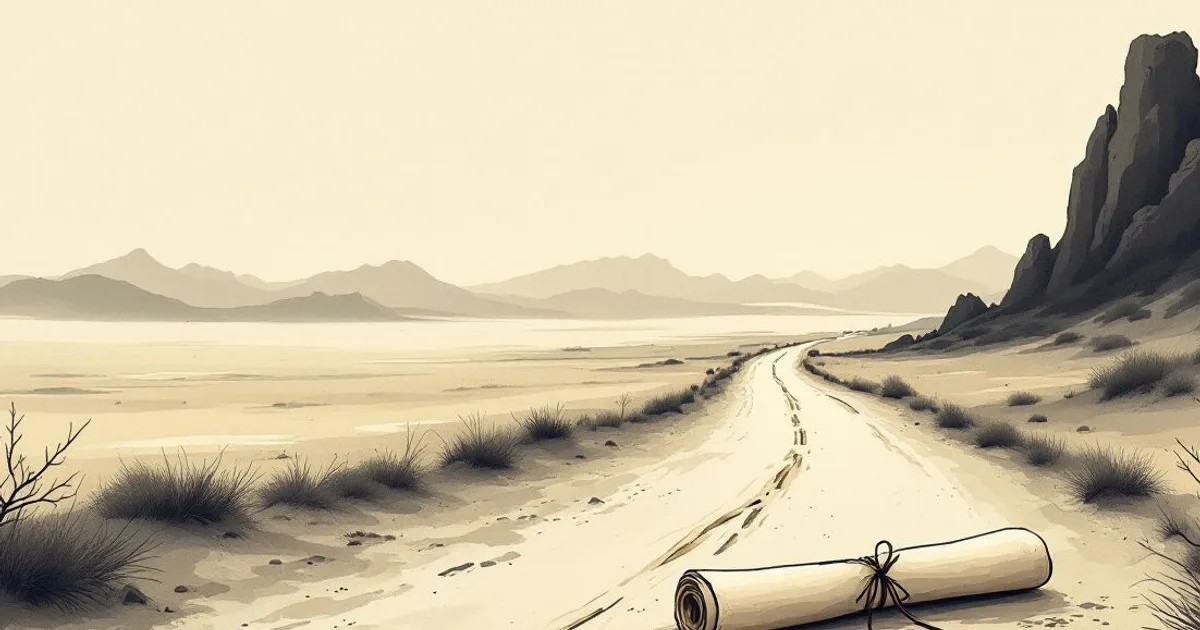
Xuanzang (c. 602–664; also spelled Hsuan-tsang) was a Chinese Buddhist monk, scholar, and translator of the Tang dynasty who made one of history’s great journeys: an epic overland pilgrimage to India in search of authentic scriptures. He studied at Nālandā, returned to China with hundreds of texts, and led a monumental translation effort. Uniquely among these masters, his life is richly documented — by his own hand. He is among the most influential teachers in Buddhist history.
The short answer
Xuanzang is the great pilgrim-scholar of Chinese Buddhism. Troubled by the incomplete and conflicting Buddhist texts available in 7th-century China, he set out to find the sources at the root — travelling thousands of miles overland to India, studying for years at its greatest monastic university, and bringing home a treasury of scripture that he then spent his life translating. His journey opened a direct channel between Indian and Chinese Buddhism, his translations reshaped Chinese Buddhism, and his written account of the trip remains one of the most valuable records we have of the ancient Buddhist world. He is also — at a great and fictional distance — the inspiration for the most famous novel in the Chinese language. (Unfamiliar terms are in the glossary.)
The great pilgrimage
Xuanzang’s decision was daring to the point of illegality. Around 629, having resolved to seek authentic scriptures in India, he left the Tang capital without imperial permission — travel abroad was restricted — and set off westward along the Silk Road, across the deserts and mountains of Central Asia.
His journey lasted roughly sixteen years. He crossed some of the harshest terrain on earth, passed through the great oasis kingdoms and Buddhist centres of Central Asia, and made his way into India, visiting the sacred sites of the Buddha’s life. The heart of his time there was study at Nālandā — the vast monastic university that was then the intellectual capital of the Buddhist world — where he trained for years under its aged and revered abbot Śīlabhadra, immersing himself especially in the philosophy of Yogācāra, the “Consciousness-Only” school. By the end he was himself a master, honoured in debate across India.
The return and the translations
In 645, Xuanzang returned to Chang’an, and the emperor who might once have punished his illegal departure now welcomed him as a celebrity. He came bearing hundreds of Buddhist texts, along with relics and images, and he devoted the remaining nineteen years of his life to the enormous task of translation.
With lavish imperial support and a large team, he rendered a vast body of Indian scripture into Chinese — on the order of 1,330 fascicles (scrolls) — with a new standard of accuracy and care, informed by his own command of Sanskrit and years of study in India. Through this work he became the great transmitter of Indian Yogācāra into East Asia; the Chinese scriptural canon was permanently enriched by his labours. The school associated with his teaching, the Faxiang (“Consciousness-Only”) school, was carried on by his chief disciple Kuiji — though it is important to say that Xuanzang transmitted the Indian Yogācāra tradition to China rather than inventing it.
The Records of the Western Regions
Xuanzang also left an extraordinary book. At the emperor’s request he compiled the “Great Tang Records on the Western Regions” (Da Tang Xiyu Ji), completed in 646 with his assistant Bianji — a detailed account of the more than a hundred kingdoms and regions he had passed through or heard of.
Its value is hard to overstate. For the history and archaeology of 7th-century Central Asia and India, Xuanzang’s Records are a primary source of the first importance: modern excavations of long-lost Buddhist sites, including Nālandā itself, have been guided by his precise descriptions. A pilgrim’s devotional journey became, almost incidentally, one of the great works of world geography and history.
Journey to the West: history and legend
Here one firewall must be built clearly. Nearly nine centuries after Xuanzang’s death, his pilgrimage inspired the beloved Ming-dynasty novel “Journey to the West” (Xiyouji, c. 1592), one of the four great classics of Chinese literature, in which a monk travels to fetch scriptures accompanied by the magical Monkey King, Sun Wukong, and other fantastical companions.
It is a masterpiece — and it is fiction. The historical Xuanzang travelled with human companions and real hardship, not supernatural protectors, and the novel’s characters and adventures are pure invention, written for entertainment and allegory long after the fact. The two should never be confused: Journey to the West is a fantasy loosely inspired by Xuanzang, not a record of his life. Recognising the distinction is exactly the kind of care a trustworthy account owes.
His legacy
Xuanzang stands almost alone among these masters for how well we know him — through his own Records and a contemporary biography by his disciples. He deepened the flow of authentic Buddhist learning from India to China, set new standards for translation, and left both a philosophical school and a geographical treasure. That he also became, transfigured, the hero of a national epic is a fitting measure of how large he loomed in the imagination of East Asia.
For the tradition he enriched, see Buddhism in China and how Buddhism spread; for the scriptures he carried and translated, Buddhist scriptures; and for his peers, the most influential Buddhist teachers in history.
Frequently asked questions
Who was Xuanzang?
Xuanzang (c. 602–664; also spelled Hsuan-tsang) was a Chinese Buddhist monk, scholar, and translator of the Tang dynasty who made an epic overland pilgrimage to India in search of authentic scriptures. He studied at the great monastic university of Nalanda, returned to China with hundreds of texts, and led one of history's great translation projects. He is associated with the East Asian Yogachara ('Consciousness-Only') school.
Why did Xuanzang travel to India?
To obtain authentic Buddhist scriptures and resolve doctrinal confusions he found in the Chinese texts of his day. Dissatisfied with the incomplete and sometimes conflicting translations available, he resolved to seek the sources in India itself. He left Tang China around 629 — without imperial permission — and journeyed for roughly sixteen years, studying under the greatest Indian masters before returning in 645.
What did Xuanzang bring back from India?
He returned to the Tang capital of Chang'an in 645 with hundreds of Buddhist texts, relics, and images, and spent the rest of his life translating. With imperial support he rendered a huge body of scripture into Chinese — on the order of 1,330 fascicles — including major Yogachara works. He also wrote the 'Great Tang Records on the Western Regions,' an invaluable eyewitness account of 7th-century Central Asia and India.
Is Journey to the West about Xuanzang?
Loosely, and as fiction. The beloved Chinese novel 'Journey to the West' (Xiyouji, about 1592) — with the Monkey King, Sun Wukong — was inspired by Xuanzang's pilgrimage, but it was written some 900 years after his death and is a fantasy, not a biography. The historical Xuanzang travelled with human companions and hardship, not magical protectors. The novel should never be mistaken for the record of his life.
Sources
- Encyclopædia Britannica — 'Xuanzang'
- Internet Encyclopedia of Philosophy — 'Xuanzang (Hsuan-tsang)'
- Xuanzang, 'The Great Tang Dynasty Record of the Western Regions,' trans. Li Rongxi (Numata Center / BDK English Tripiṭaka, 1996)
- Sally Hovey Wriggins, 'The Silk Road Journey with Xuanzang' (Westview Press, rev. ed. 2004)