Avalokiteshvara: The Bodhisattva of Compassion
Avalokiteshvara is the bodhisattva of compassion — in Encyclopædia Britannica’s description, “the bodhisattva of infinite compassion and mercy, possibly the most popular of all figures in Buddhist legend.” He vows to hear the cries of every suffering being and to come to their aid, and across Asia he is loved under many names: Guanyin in China, Kannon in Japan, and Chenrezig in Tibet.
The lord who looks upon the world
The name Avalokiteshvara is usually understood as “the lord who looks down” — or who looks in every direction — upon the world. The image is of a being who gazes on all of existence and perceives its suffering, and whose whole nature is to respond. Where Mañjuśrī embodies wisdom, Avalokiteshvara embodies compassion (karuṇā) — the active, tender movement of the heart toward those in pain. He is, in the Mahayana imagination, compassion itself given a face.
He is closely linked to the celestial Buddha Amitabha, lord of the Pure Land: the tradition calls Avalokiteshvara the earthly manifestation of Amitabha, and images often show a small figure of Amitabha seated in his headdress. The two are constant companions in Pure Land devotion.
Where he comes from
Avalokiteshvara rose to prominence with the great Mahayana sutras. An early Avalokiteshvara-sutra was, as Britannica records, incorporated into the immensely popular Lotus Sutra in the 3rd century CE, where chapter 25 — “The Universal Gateway” — is devoted entirely to him. That chapter promises that anyone who calls his name with sincere heart will be heard and delivered from danger, which did much to spread his cult across Asia.
He appears, too, as the speaker of one of the most recited texts in all of Buddhism: in the Heart Sutra, it is Avalokiteshvara who, contemplating deeply, sees that the five aggregates are empty, and teaches that liberating insight to the disciple Śāriputra. Compassion and wisdom meet in him.
His many forms
Because his compassion is boundless, art gave Avalokiteshvara extraordinary forms to express it. He is often shown with eleven heads, the better to look in every direction at once and miss no cry for help; and in his thousand-armed form, his arms — each with an eye in the palm — “rise like the outspread tail of a peacock” (Britannica), every hand ready to reach out and save. A tender legend holds that, overwhelmed by the scale of the world’s suffering, his head split into pieces and his body into a thousand arms so that he could help all beings at once.
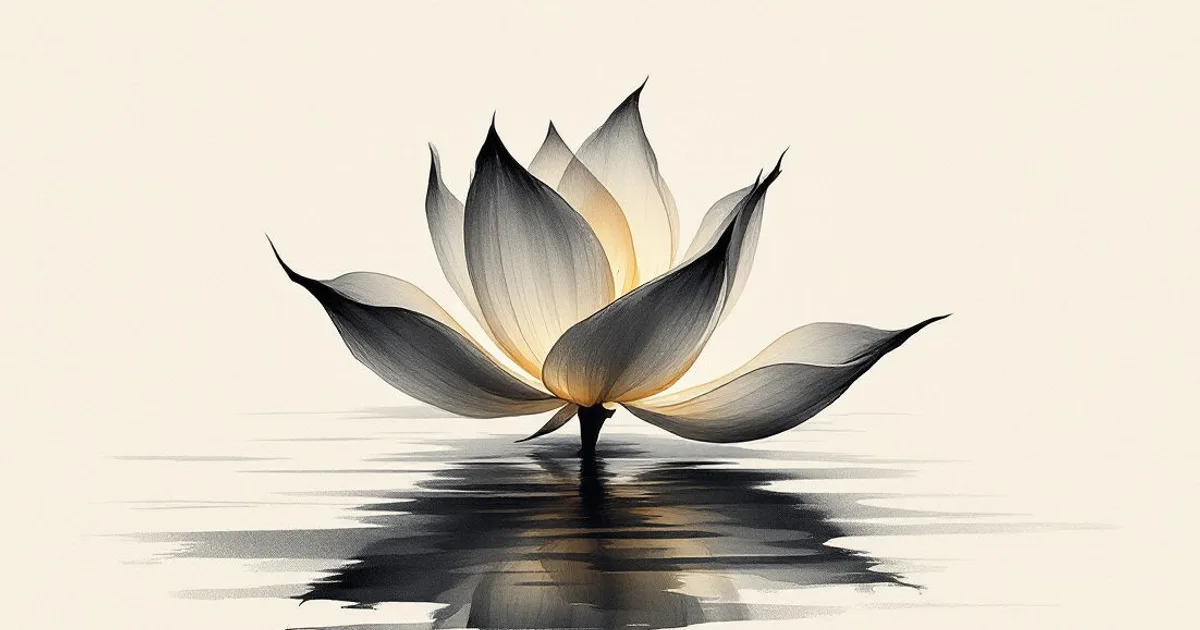
His most ordinary depictions are gentler: a serene figure holding a lotus, the flower of awakening rising unstained from the mud.
”Calling his name”: the Universal Gateway
Chapter 25 of the Lotus Sutra, the chapter devoted to Avalokiteshvara, is one of the great sources of his popularity — and it explains how his compassion is meant to be met. Titled the “Universal Gateway,” it promises that whoever, in danger or distress, single-mindedly calls his name will be heard and delivered. The sutra runs through a litany of perils — fire that does not burn, floodwaters that subside, falls that become a gentle floating, weapons that shatter, chains that fall away — each one answered by the bodhisattva who turns at the sound of a cry.
It is easy to read this as mere magic, but the deeper point is the one the whole Mahayana presses: that compassion is responsive — that it bends toward suffering the instant it is called, asking nothing in return but the sincerity of the call. The same chapter is the source of the teaching that Avalokiteshvara takes whatever form will help — monk or child, man or woman — which would, in time, give rise to his transformation in China into the female Guanyin.
Across Asia, under many names
No bodhisattva travelled so widely or transformed so completely:
- In China, he became Guanyin (Kuan Yin), where, remarkably, the depiction shifted over the centuries from male to female — giving East Asia its beloved “Goddess of Mercy,” invoked for protection, childbirth, and comfort. In Japan she is Kannon.
- In Tibet, he is Chenrezig (Spyan-ras-gzigs), the patron bodhisattva of the whole country. Britannica notes he was introduced to Tibet in the 7th century and became its most popular figure — successively reincarnated, the tradition holds, in each Dalai Lama.
It is to Avalokiteshvara that Tibetans address the most famous mantra of all, om maṇi padme hūṃ, which Britannica credits him with introducing. Carved on stones, spun in prayer wheels, and murmured on the breath, it is the sound of his compassion in the world. (You can read more about it in our guide to Buddhist mantras.)
To turn toward Avalokiteshvara, in the end, is not to petition a distant deity but to turn toward compassion itself — the quality the Mahayana places at the very centre of the path. (For the whole company of these figures, see our guide to buddhas and bodhisattvas; unfamiliar terms are in the glossary.)
Frequently asked questions
Who is Avalokiteshvara?
Avalokiteshvara is the bodhisattva of compassion — in Encyclopaedia Britannica's words, 'the bodhisattva of infinite compassion and mercy, possibly the most popular of all figures in Buddhist legend.' He vows to hear the cries of all suffering beings and to come to their aid. He is known as Guanyin in China, Kannon in Japan, and Chenrezig in Tibet.
What does the name Avalokiteshvara mean?
It is usually rendered 'the lord who looks down (or looks in every direction)' — the one who gazes upon the world and perceives its suffering. The name joins the sense of compassionate watching with ishvara, 'lord.' It captures his defining act: attending to the cries of all beings.
Is Avalokiteshvara the same as Guanyin and Chenrezig?
Yes — they are the same bodhisattva under different names and cultural forms. In China the figure became Guanyin (Japanese: Kannon), where over time the depiction shifted from male to female, giving the beloved 'Goddess of Mercy.' In Tibet he is Chenrezig (Spyan-ras-gzigs), the patron bodhisattva of the country, embodied for Tibetans in the Dalai Lama.
What is the mantra of Avalokiteshvara?
It is om maṇi padme hūṃ, the most famous mantra in Tibetan Buddhism, which Britannica credits Avalokiteshvara with introducing. Often glossed in connection with 'the jewel in the lotus,' it is chanted and inscribed on prayer wheels and mani stones across the Himalayas as an invocation of his compassion.
Sources
- Avalokiteshvara (entry), Encyclopædia Britannica — 'the bodhisattva of infinite compassion and mercy, possibly the most popular of all figures in Buddhist legend'; the earthly manifestation of the Buddha Amitabha; introduced to Tibet in the 7th century and reincarnated in each Dalai Lama; credited with the mantra om maṇi padme hūṃ
- Saddharmapuṇḍarīka (Lotus Sutra), chapter 25, 'The Universal Gateway of Avalokiteshvara' — the chapter devoted to the bodhisattva, into which the earlier Avalokiteshvara-sutra was incorporated in the 3rd century CE (per Britannica)
- Prajñāpāramitāhṛdaya (Heart Sutra) — the discourse spoken by Avalokiteshvara to Śāriputra; see our guide to the Heart Sutra